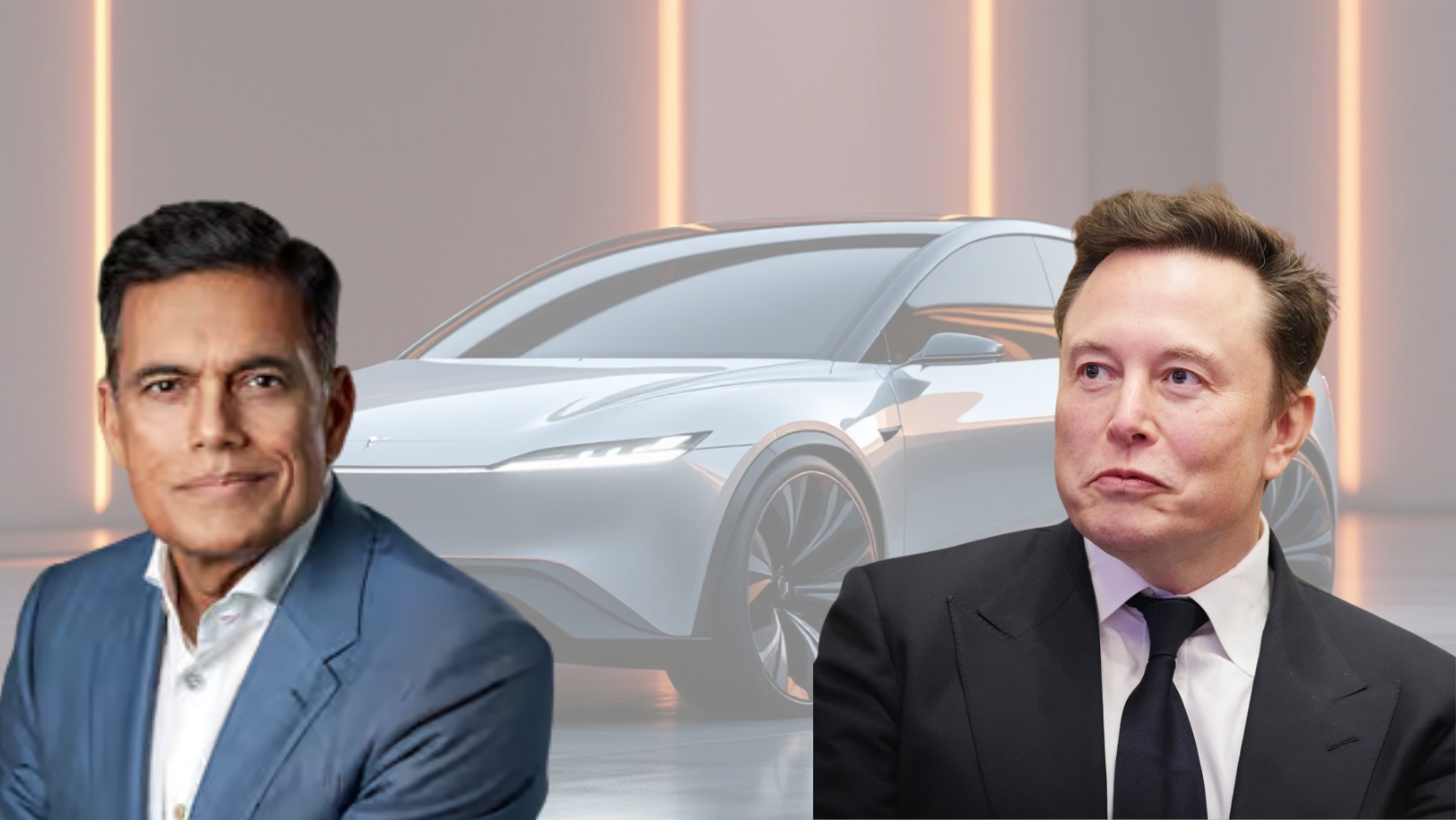
JSW Chairman Asserts Tesla Will Struggle Against Homegrown EV Giants in India
Tesla’s expansion into India’s electric vehicle (EV) market will not be smooth, as the company faces strong competition from domestic automakers like Tata Motors and Mahindra & Mahindra (M&M), according to Sajjan Jindal, Chairman of JSW Group.
Speaking at the Ernst & Young ‘Entrepreneur Of The Year’ awards, Jindal remarked that Tesla CEO Elon Musk may find it challenging to replicate the success of Indian automakers, citing the unique demands and dynamics of the Indian automotive market.
Tesla’s India Ambitions: A Tough Road Ahead?
Jindal emphasized that India’s EV ecosystem is evolving rapidly, with homegrown manufacturers already leading the market.
“Elon Musk is not here. He is in the US. He can’t be successful in India! We Indians are here. He cannot produce what Mahindra can do, what Tata can do,” said Jindal, making a strong case for India’s dominant domestic players in the EV space.
Jindal Acknowledges Musk’s Genius but Questions Tesla’s India Strategy
While recognizing Musk’s technological achievements, Jindal remained skeptical of Tesla’s ability to dominate in India.
“He is super smart, no question about it. He’s a maverick, doing spacecraft and all that. He’s done amazing work, so I don’t want to take anything away from him. But to be successful in India is not an easy job,” he added.
The remarks come at a time when Tesla is actively exploring entry into the Indian market, with the government considering tariff reductions on imported EVs. However, negotiations remain complicated as Washington is pushing for lower duties, while New Delhi remains cautious about an immediate reduction to zero, according to reports by source.
Indian Automakers Hold Competitive Edge Over Tesla
Tesla’s global success is largely attributed to its technological innovations, premium positioning, and a strong charging infrastructure. However, the Indian market presents a different challenge, where factors such as affordability, localization, and after-sales service play a crucial role in customer adoption.
Tata Motors and Mahindra & Mahindra have already established a strong foothold in India’s EV segment, offering cost-effective, locally manufactured electric vehicles tailored to Indian driving conditions.
- Tata Motors leads the Indian EV market, commanding over 70% share with models like Nexon EV and Tiago EV.
- Mahindra & Mahindra is also expanding aggressively with XUV400 and upcoming electric SUVs.
- Both companies enjoy strong government support through initiatives like the Faster Adoption and Manufacturing of Electric Vehicles (FAME) policy and Production Linked Incentives (PLI) for EV manufacturing.
JSW’s Entry into the EV Market
Jindal’s JSW Group is also venturing into the electric and hybrid vehicle segment. JSW MG Motor India, a joint venture with China’s SAIC Corp, recently showcased new energy vehicles, including electric and plug-in hybrid models, at the Bharat Mobility Global Expo.
Tesla’s India Strategy: High Stakes, High Hurdles
Tesla has long expressed interest in entering the world’s third-largest automobile market, but high import duties have remained a major roadblock.
Tesla’s India roadmap includes:
- Negotiations with the Indian government for lower import tariffs on EVs.
- Plans for a local manufacturing facility to meet “Make in India” requirements.
- Exploring a localized supply chain to reduce costs and improve affordability.
- Developing a charging infrastructure to support Tesla’s high-performance EVs.
Despite these efforts, Tesla will have to overcome several challenges before it can compete effectively with Indian manufacturers.
Can Tesla Succeed in India? Experts Remain Divided
While Tesla’s global reputation and cutting-edge technology make it a strong contender, analysts believe local expertise, affordability, and robust distribution networks give Indian players a competitive edge.
The EV market in India is still in a nascent stage, and consumer preference leans toward budget-friendly, practical models rather than premium electric vehicles.
Industry experts suggest Tesla’s best bet is to:
- Localize production to reduce costs and import duties.
- Expand partnerships with Indian suppliers for battery manufacturing.
- Introduce budget-friendly models tailored for Indian buyers.
- Leverage India’s growing EV ecosystem to build a sustainable market presence.
Tesla vs. Indian EV Giants – A Market Battle to Watch
Jindal’s remarks underscore the challenges international automakers face in India, where homegrown brands like Tata Motors and Mahindra have already gained market leadership in the EV space.
While Tesla remains an industry pioneer, its ability to replicate its global success in India will depend on how well it navigates regulatory policies, localization challenges, and the affordability factor.
With India’s EV sector on an aggressive growth trajectory, the coming years will reveal whether Tesla can establish itself as a dominant player or whether domestic giants will continue to lead the charge.


