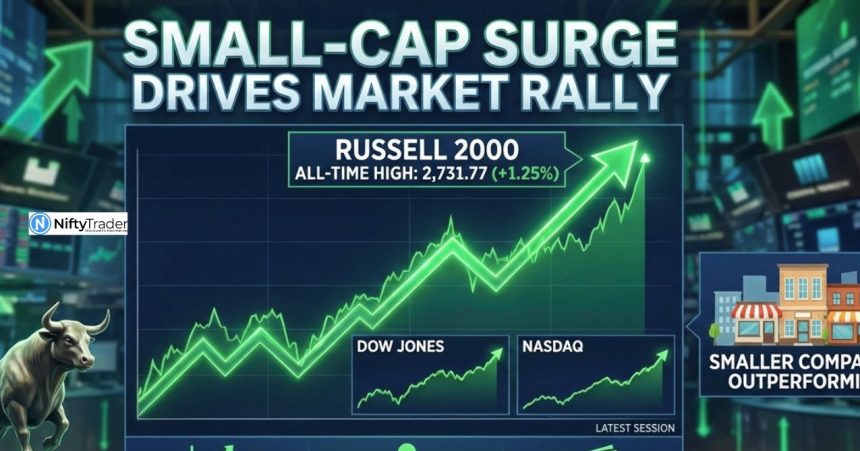
In the latest market session, U.S. equities climbed sharply, with the Russell 2000 index rising 1.25% to reach an all-time high, driven by strong gains in smaller companies. This surge marked a major shift in investor interest, as small-cap stocks outperformed larger benchmarks and helped lift overall market sentiment.
The Russell 2000—which tracks roughly 2,000 small-cap U.S. firms—ended the trading day at 2,731.77 points, its highest level ever recorded. That performance outpaced key blue-chip indexes, including the Dow Jones Industrial Average and the tech-heavy Nasdaq Composite, which also finished the session higher.
What’s Fueling the Small-Cap Surge
Market participants pointed to several supportive macroeconomic signals that helped drive the rally:
-
Stronger-than-expected U.S. GDP data, reinforcing confidence in economic momentum
-
Resilient labor market figures, easing fears of an imminent slowdown
-
Stabilizing financial conditions, reducing pressure on borrowing-sensitive firms
Together, these factors encouraged investors to move toward smaller companies that tend to benefit more directly from domestic economic strength.
Unlike multinational mega-caps, small-cap firms are generally more exposed to U.S. demand trends, making them attractive when growth expectations improve.
A Shift in Investor Strategy
Analysts say the latest move reflects a broader change in market psychology. As recession concerns fade and rate-related pressures begin to ease, investors appear more willing to take on risk—especially in segments that had lagged earlier in the cycle.
Small-cap stocks are often viewed as a barometer of confidence in the underlying economy. Their leadership suggests investors believe growth can be sustained without triggering sharp financial stress.
There are also valuation considerations at play. Many small-cap names entered the year trading at discounts relative to large-cap peers, making them appealing as investors search for underappreciated opportunities.
What It Means for the Broader Market
The Russell 2000’s record close carries implications beyond a single index:
-
It points to healthier market participation, with gains spread across sectors and company sizes
-
It reduces reliance on a handful of mega-cap stocks to support overall index performance
-
It strengthens the case for a more durable and balanced rally
Historically, periods when small-cap stocks outperform have often coincided with expanding economic growth and improving corporate earnings expectations.
Implications for Investors
For both institutional and retail investors, small-cap leadership can influence portfolio strategy:
-
Asset allocation shifts toward domestic growth themes
-
Increased interest in cyclicals, industrials, and consumer-oriented firms
-
Reassessment of portfolios heavily concentrated in large technology stocks
However, analysts caution that small-cap rallies can also be more volatile. Sustained outperformance will likely depend on continued economic strength and stable financial conditions.
Why This Rally Matters
This milestone adds to a pattern of persistent outperformance by smaller companies so far this year, making it one of the most important developments in recent U.S. market activity.
Key takeaways include:
-
Small-cap strength signals rising confidence in U.S. economic growth
-
Record highs in the Russell 2000 suggest improving market breadth
-
The trend may mark an early-stage rotation rather than a short-term trade
While it remains to be seen whether small caps can maintain leadership, the latest rally underscores a meaningful change in investor behaviour—and one that could shape market dynamics in the months ahead.