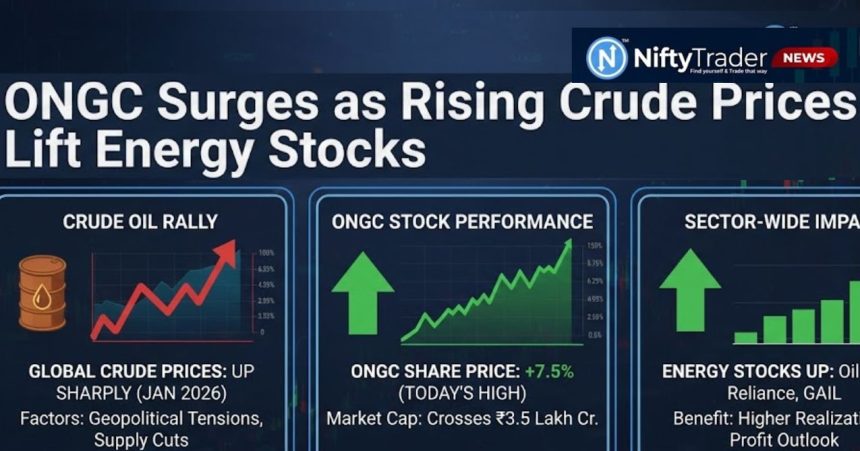
ONGC is back in the spotlight, and it isn’t just a fleeting market buzz. Shares of India’s oil exploration heavyweight surged over 6% today, brushing close to a fresh 52-week high, hitting multi-month highs alongside Oil India, which climbed nearly 10%. The trigger? A mix of rising global crude prices and a strategic joint venture move that caught investors’ attention.
Strategic JV and Market Sentiment
Earlier today, ONGC’s joint venture signed a shipbuilding deal with Samsung Heavy Industries. While it might sound like a routine corporate development, the market reacted sharply. Investors are seeing this as a strategic expansion that could enhance operational flexibility and support offshore production capacity.
But it’s not just the JV news driving optimism. Global crude prices have edged higher in recent weeks, and for a domestic upstream player like ONGC, this is a clear margin booster. Unlike refiners or importers who face pressure when oil prices climb, ONGC’s revenue per barrel grows almost directly with international benchmarks, making each uptick in Brent or WTI a tangible gain.
Why Rising Crude Matters for ONGC
ONGC’s financials are tightly linked to global crude trends. Every incremental rise in oil prices translates into stronger earnings, provided production remains steady. The company’s diverse portfolio, from mature onshore fields in Assam and Gujarat to deepwater assets in the Mumbai and KG basins, ensures that gains are broadly captured across segments.
Analysts note that current geopolitical tensions and tightening supply in global markets have kept oil elevated. That environment favors upstream producers, and ONGC is positioned to benefit both from price surges and government policies that support domestic energy firms.
Stock Performance and Investor Interest
Today’s price jump reflects more than short-term news. ONGC has been under renewed investor focus, with domestic and foreign institutions eyeing it as a hedge against rising import bills and inflation. Its stock historically performs well when oil prices sustain upward momentum, and the current rally is following that pattern.
Market watchers also point to broader upstream sector strength. Peers like Oil India are seeing similar moves, suggesting investor appetite is rotating toward production-heavy energy companies rather than downstream refiners or oil-linked infrastructure names.
| Metric | Details |
|---|---|
| ONGC share move | Up to 6–7% intraday |
| Oil India share move | Up to 10% |
| Trigger | Rising crude prices and the Samsung Heavy Industries JV deal |
| Crude price trend | Rising amid US supply disruptions |
| Energy sector trend | Outperformed Sensex and Nifty |
| Vessels delivery timeline | FY 2028–29 |
| Purpose of vessels | Ethane transport for OPaL |
Check Live: ONGC Option Chain (ONGC) — Live OI, IV, Greeks & PCR
Risks That Still Lurk
While the current setup favors ONGC, the road isn’t entirely smooth. Crude oil is inherently volatile, and global events from OPEC decisions to Middle East tensions can swing markets overnight. Domestically, regulatory shifts or changes in export policies could temper gains.
Still, ONGC’s disciplined cost management and strategic investments in deepwater projects provide a cushion. Analysts recommend keeping a close eye on production guidance, joint venture expansions, and hedging strategies, all of which can influence quarterly results significantly.
Bottom Line
ONGC’s unique position combining strong domestic production, deepwater exploration, and favorable policy tailwinds makes it a clear beneficiary when global crude prices rise. Today’s share surge isn’t just a blip; it reflects investor confidence in ONGC’s ability to navigate volatile oil markets and capitalize on higher prices.
For anyone looking at India’s energy sector, ONGC remains a stock worth watching, not just for immediate gains but as a proxy for the broader upstream oil story.
FAQ: ONGC and Rising Crude Oil Prices
Q1. Is today’s ONGC news real and the latest?
Yes. ONGC shares surged on January 28, 2026, driven by a strategic JV deal with Samsung Heavy Industries and rising crude oil prices.
Q2. Why did ONGC stock rise today?
Two main reasons:
-
A shipbuilding contract for ethane carriers boosting long-term logistics capacity
-
Rising global crude prices improving earnings outlook
Q3. Does a higher oil price always benefit ONGC?
Generally, yes. As an upstream producer, ONGC earns more per barrel when crude rises, while costs stay relatively stable.
Q4. Is ONGC a long-term beneficiary of global oil volatility?
Partly. Volatility helps during price spikes but can hurt during downturns. Long-term gains depend on production growth and policy stability.
Q5. What should investors watch next?
Production guidance, crude price trends, government pricing policies, and progress on new offshore projects.