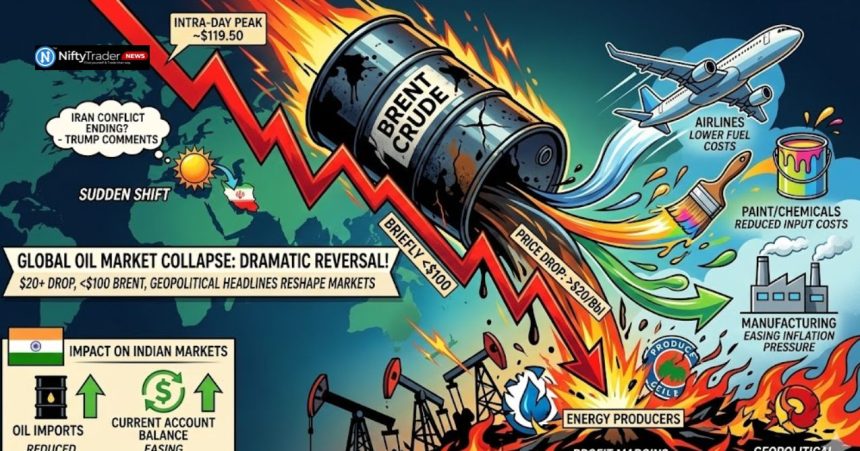
Global oil markets witnessed a dramatic reversal on Tuesday after comments from Donald Trump suggested the conflict involving Iran could end soon, triggering one of the sharpest intraday collapses ever recorded in crude prices.
Brent crude tumbled more than $20 from its intraday peak, briefly falling below $100 per barrel, as traders rapidly unwound the geopolitical risk premium that had built up during escalating tensions in the Middle East.
The sudden shift highlights how quickly geopolitical headlines can reshape global commodity markets and why investors across oil, airline, chemical, and manufacturing stocks are closely tracking the move.
What Triggered the Oil Market Collapse
The selloff began shortly after Trump suggested the conflict involving Iran could end “very soon,” easing fears of prolonged disruptions to global oil supplies.
Earlier in the session, escalating tensions had pushed crude sharply higher, with Brent touching around $119.50 per barrel before the reversal.
Once expectations shifted toward possible de-escalation, traders moved quickly to lock in profits.
Key market moves included the following:
• Brent crude plunging over $20 from intraday highs
• Prices briefly dropping below $100 per barrel
• U.S. crude sliding toward the mid-$80 range
• One of the largest intraday reversals on record in oil markets
The move effectively erased much of the geopolitical premium that traders had priced in when fears grew that the conflict could disrupt shipments through critical oil routes.
Why Oil Prices Matter for Global Markets
Oil is one of the most influential commodities in global financial markets.
Sharp moves in crude prices can quickly reshape inflation expectations, corporate earnings outlooks, and sector leadership in equity markets.
When oil prices fall sharply, the impact often includes:
• Lower inflation pressure globally
• Reduced transportation and manufacturing costs
• Improved profit margins for oil-consuming industries
At the same time, energy producers often face pressure when crude prices decline rapidly.
Potential Impact on Indian Markets
For investors in India, oil price swings can have significant implications because the country imports the majority of its crude oil needs.
Lower oil prices can:
• Reduce the country’s import bill
• Ease inflation pressures
• Improve the current account balance
• Support consumption-driven sectors
Several Indian stocks and sectors could react if crude remains under pressure.
Oil & Gas Producers
Companies such as:
• Oil and Natural Gas Corporation
• Reliance Industries
may face pressure if crude prices remain weak.
Airlines
Lower crude prices reduce aviation turbine fuel costs, one of the largest expenses for airlines.
Stocks often monitored by traders include:
• InterGlobe Aviation
• SpiceJet
Airline stocks historically benefit when oil prices fall sharply.
Paint and Chemical Companies
Crude derivatives are important raw materials for several manufacturing sectors.
Companies such as:
• Asian Paints
could benefit if lower oil prices reduce input costs.
Global Market Reaction
Equity markets across Asia strengthened after the oil drop eased fears of a renewed global inflation shock.
Investors had been concerned that a prolonged conflict could disrupt shipments through the Strait of Hormuz, one of the world’s most critical energy supply corridors.
With those fears temporarily easing, risk sentiment improved across global markets.
Check Live: RELIANCE INDUSTRIES Options Chart | Nifty Trader
What Traders Should Watch Next
Despite the sharp drop, oil markets could remain highly volatile.
Key factors to monitor include the following:
1. Developments in the Middle East conflict
Any renewed escalation could quickly restore the geopolitical premium in crude prices.
2. Policy signals from OPEC
OPEC and its allies may adjust supply if prices fall too quickly.
3. Global demand outlook
Economic growth expectations, especially in China, will influence oil demand.
4. Inflation and central bank policy
A sustained drop in crude could ease pressure on global interest rates.
The Bottom Line
Tuesday’s dramatic oil reversal shows how quickly geopolitical signals can reshape global markets.
For investors, the move could trigger short-term sector rotation:
• Pressure on oil producers
• Relief for airlines and fuel-intensive industries
• Lower inflation concerns globally
If signs of de-escalation in the Middle East strengthen, crude prices and the sectors tied to them could remain volatile in the coming weeks.
FAQs
Why did oil prices crash suddenly?
Oil prices plunged after comments from Donald Trump suggested the conflict involving Iran may end soon.
The remarks triggered rapid unwinding of the geopolitical risk premium that had pushed crude prices higher.
How big was the oil price reversal?
Crude oil experienced one of its largest intraday reversals on record, falling more than $20 from highs near $119 per barrel and briefly dropping below $100.
Why do oil prices affect stock markets?
Oil influences inflation, transportation costs, manufacturing expenses, and corporate profits.
When oil falls sharply, sectors such as airlines, chemicals, and paints often benefit, while oil producers may face pressure.
Why are Indian markets sensitive to oil prices?
India imports the majority of its crude oil. Lower oil prices reduce inflation risks and improve the country’s trade balance, which can support economic growth and equity markets.
What should traders watch next in oil markets?
Key factors include:
-
Developments in the Middle East conflict
-
Policy signals from OPEC
-
Global demand trends, especially in China
-
Inflation and central bank policy expectations