What Just Happened
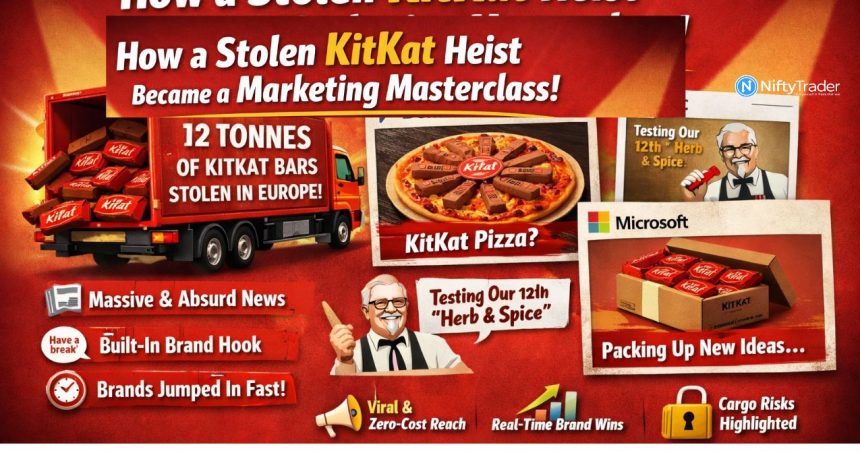
The theft of 12 tonnes of KitKat chocolates in Europe wasn’t just a logistics story it became a real-time case study in how modern brands compete for attention. Within hours, companies like Domino’s, KFC, Microsoft, and Kerala Tourism jumped into the narrative, turning a supply-chain incident into a viral marketing moment with measurable engagement impact.
Why This Matters for Markets
At first glance, this seems like a quirky meme story. But the underlying signal is strategic attention monetisation:
- Brands that react fastest capture disproportionate visibility
- Marketing cycles are shrinking from weeks → hours
- Social virality now creates real economic leverage, influencing brand recall, demand, and investor sentiment
Forward-Looking Risk: Companies slow to respond may miss these windows, creating a potential competitive gap.
What Drove the Viral Explosion
1️⃣ Scale + Absurdity — 12 tonnes stolen → headline-worthy, meme-ready
2️⃣ Built-in Brand Hook — KitKat’s “Have a break” slogan instantly adaptable
3️⃣ Fast Brand Participation — Domino’s, KFC, Microsoft jumped in within hours
Example:
- Domino’s joked about launching a “KitKat pizza”
- KFC teased its “12th herb & spice”
- Microsoft joked internally about “boxes of KitKats”
Speed of response is what turns ordinary news into viral trend, a critical market-relevant insight.
Sector Implications
- QSR & FMCG: Real-time marketing is outpacing traditional campaigns
- Higher ROI on social-first campaigns
- Lower dependence on traditional media
- Watch: Companies scaling agile content may see brand lift translate into sales
- Tech & Social Platforms:
- Platforms gain from increased engagement and ad cycles
- Meme-driven attention becomes monetisable
- Logistics & Supply Chain:
- Theft highlights global cargo risks
- Traceability, batch tracking, and insurance remain crucial
Market Tension: While social virality drives free engagement, supply-chain risks could still trigger material losses. Investors must weigh both.
The Bigger Shift: “Crisis → Content → Capital”
- Old model: Supply chain disruption → financial loss
- New reality: Disruption → viral content → brand visibility → potential revenue upside
This reflects an expectation gap for marketers and investors: attention cycles now matter as much as physical product metrics.
What Traders & Investors Should Watch
- Brand Agility Premium: Firms that respond quickly may gain incremental demand and stronger recall
- Consumer Attention Cycles: Shorter cycles compress monetization windows; slow movers may lag
- Digital Marketing Spend Trends: Shift toward influencer-driven, meme-led campaigns signals forward-looking risk for traditional ad-heavy competitors
Bottom Line: Attention is increasingly a marketable asset. Companies that capture it fast can outperform peers, turning marketing skill into measurable business advantage.
Also Read: $500M AGS Health IPO in Works — Blackstone Inc. Bets on India Despite Market Weakness
FAQs
Q1: Why did the KitKat theft go viral?
The mix of absurd scale, meme-ready branding, and fast brand participation created instant global social media traction.
Q2: How does this affect FMCG & QSR sectors?
Brands showing agility in real-time marketing gain higher engagement ROI, reducing reliance on traditional campaigns.
Q3: Are logistics risks still relevant?
Yes, the incident highlights global cargo theft risks; supply-chain traceability and insurance remain critical.
Q4: Should investors watch brand agility?
Yes, companies that convert real-time attention into revenue may see measurable market advantages over slower competitors.
Q5: Is this just a PR story or a market signal?
Both, this incident demonstrates that attention monetisation is becoming a real-time market factor, creating potential alpha opportunities.