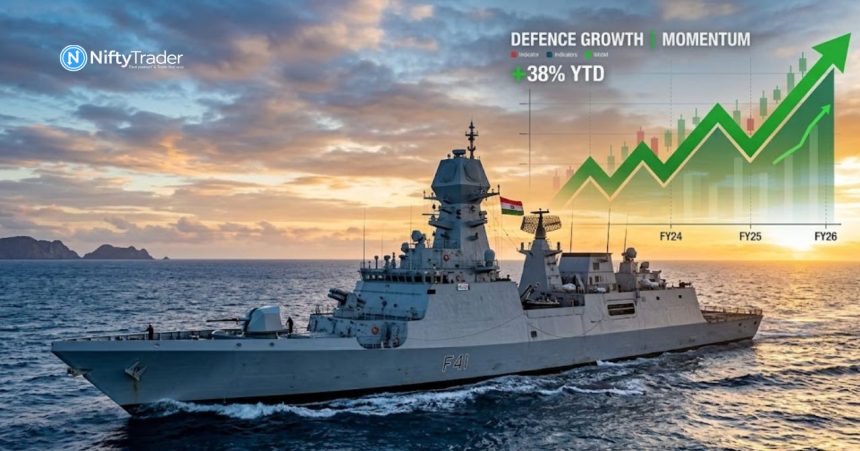
India’s defence manufacturing story took a fresh step forward today as the Indian Navy inducted its latest stealth frigate, INS Taragiri, built by Mazagon Dock Shipbuilders Limited, a development that reinforces momentum in defence stocks and the broader “Make in India” theme.
What Just Happened
India commissioned its fourth Project 17A stealth frigate, INS Taragiri (F41), on April 3, marking a significant upgrade in naval combat capabilities and indigenous defence production.
- Built with over 75% indigenous content
- Equipped with BrahMos supersonic strike capability
- Part of India’s next-generation stealth warship programme
- Constructed by Mazagon Dock, a key listed defence PSU
This is not just a ceremonial milestone; it signals execution momentum in India’s defence capex cycle.
Why Markets Are Watching This
This event matters for markets because it reinforces three critical investment themes:
1️⃣ Execution Visibility in Defence Orders
Large defence programmes often face delays, but delivery of Taragiri shows:
- order execution is progressing
- timelines are being met
- capability build-out is real
👉 This strengthens investor confidence in defence order pipelines.
2️⃣ Indigenous Manufacturing Narrative Strengthens
With over 75% local content, Taragiri highlights:
- deep domestic supply chains
- MSME participation
- reduced import dependency
👉 This directly supports long-term valuation premiums for defence PSUs.
3️⃣ Strategic Signalling + Budget Backing
The commissioning aligns with:
- rising defence budgets
- geopolitical positioning
- focus on maritime security
👉 Markets typically re-rate defence stocks when policy + execution align.
Stocks & Sectors in Focus
🔵 Primary Beneficiary
- Mazagon Dock Shipbuilders Limited
- Core shipbuilder behind Taragiri
- Direct exposure to naval contracts
- Strong order book visibility
🟢 Broader Defence Ecosystem (Indirect Impact)
- Shipbuilding ecosystem suppliers
- Missile & weapons system manufacturers
- Defence electronics players
Taragiri reflects system-level capability build, not just a single asset.
What Makes Taragiri Important
- Stealth design → lower radar detection
- Multi-role combat capability → air, surface, submarine warfare
- Advanced combat systems integration
- Part of a fleet expansion strategy under Project 17A
👉 This is a capability upgrade, not an incremental addition.
Immediate Market Reaction vs Structural Signal
There may not always be an instant stock move on such events, but:
- These developments build medium-term rerating narratives
- Reinforce earnings visibility in defence PSUs
- Support sector rotation into defence during uncertainty
What Traders Should Watch Next
- Order inflows and execution updates from Mazagon Dock
- New defence contract announcements
- Budget allocation trends for naval expansion
- Movement in defence PSU stocks post-event
The Bigger Market Signal
This is not just a defence story, it’s a capital cycle + policy alignment signal.
When:
- government spending
- domestic manufacturing
- execution delivery
…start aligning consistently, markets begin to price in multi-year growth visibility.
Bottom Line
Taragiri’s commissioning is a signal event, not just a news headline.
It reinforces:
- defence as a structural market theme
- Mazagon Dock’s execution credibility
- India’s self-reliance narrative gaining traction
👉 For markets, this is less about today and more about what gets priced over the next few quarters.
FAQs
1. Why are brokerages bullish on 70+ stocks for FY27?
Brokerages expect earnings growth recovery, government capex support, and sectoral rotation to drive multi-year upside across banking, defence, and infrastructure.
2. Which sectors have the highest conviction bets?
Banking & financials, defence, capital goods, and consumption are seeing the strongest institutional confidence due to earnings visibility and policy backing.
3. Are defence stocks still a good investment after the recent rally?
Yes, structurally, but valuations are no longer cheap. Future returns depend on execution, order inflows, and sustained government spending.
4. What are the biggest risks to these bullish projections?
Key risks include global recession fears, rising crude prices, geopolitical tensions, and slower-than-expected earnings growth.
5. Should investors buy midcaps from this list?
Selective exposure is preferred. Midcaps offer higher growth but also carry higher volatility and drawdown risk during market corrections.
6. Is this a good time to enter the market or wait?
Markets are in a transition phase. Staggered buying (SIP or phased allocation) is generally more prudent than lump-sum entry.
7. What is the biggest trigger for re-rating these stocks?
Sustained earnings growth combined with policy support and consistent execution can lead to a valuation re-rating over the next 2–4 quarters.
8. Can global events impact these stock picks?
Yes. Events like war, commodity shocks, or US rate changes can impact flows, valuations, and sector performance significantly.