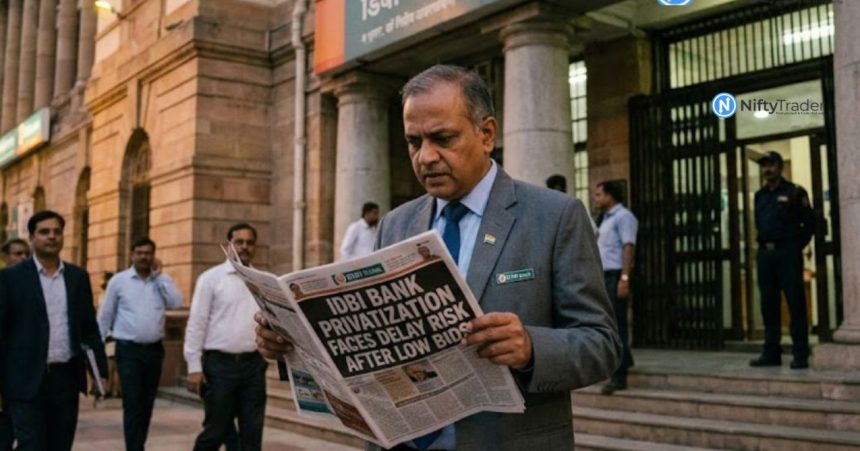
India’s long-running plan to privatize IDBI Bank may face a fresh hurdle, with financial bids for the lender reportedly coming in below the government’s reserve price, according to people familiar with the matter.
The development could delay one of India’s most closely watched banking disinvestments and raises new questions about valuation expectations in the country’s broader public sector bank privatization push.
What Just Changed
Sources indicate that financial bids submitted for the majority stake in IDBI Bank are likely lower than the minimum valuation sought by the government and Life Insurance Corporation of India (LIC).
If confirmed, authorities may need to reconsider the next steps in the sale process, including renegotiating terms, inviting revised bids, or delaying the transaction.
The Centre and LIC together are attempting to sell about a 60.7% stake in IDBI Bank, transferring management control to a strategic buyer as part of the government’s broader privatization program.
Currently:
-
The Government of India owns about 45.48%
-
LIC holds roughly 49.24%
The combined stake sale would mark one of the largest strategic disinvestments in India’s banking sector.
Why the Bids May Be Lower
Market participants point to several factors that could explain the apparent valuation gap:
High reserve price expectations
Authorities are believed to be seeking a premium valuation for transferring management control.
Execution and integration risk
Potential buyers may be factoring in operational integration costs and regulatory complexity involved in managing a large former public-sector lender.
Competitive banking landscape
With strong private-sector banks already dominating retail and corporate lending, bidders may be pricing in slower growth potential.
While IDBI Bank has strengthened its balance sheet and profitability following restructuring and earlier capital support from LIC, investors remain cautious about paying aggressive valuations in a competitive banking environment.
Who Has Shown Interest
Earlier reports suggested interest from global and domestic financial institutions, including:
-
Fairfax Financial
-
Emirates NBD
However, Kotak Mahindra Bank later clarified it had not submitted a financial bid, effectively narrowing the potential buyer pool.
Why Markets Are Watching Closely
The IDBI Bank stake sale has become a flagship test for India’s privatization strategy, and its outcome could influence multiple areas of the financial sector.
1. Future PSU bank privatization
A successful transaction would signal that large state-owned banks can attract global strategic investors.
2. Government disinvestment revenues
The deal is expected to generate tens of thousands of crores in proceeds for the government and LIC.
3. Valuations across PSU banks
Progress or delays in the sale could influence investor sentiment toward other public-sector banking stocks.
Officials are expected to review the submitted bids before taking a final call. Possible outcomes include the following:
-
Accepting bids after negotiation
-
Inviting revised financial offers
-
Delaying the sale until market valuations improve
The government’s decision will be closely tracked by investors because the privatization process has already stretched over several years.
The Bottom Line
The potential gap between submitted bids and the government’s reserve price introduces fresh uncertainty into the IDBI Bank stake sale.
While investor interest appears to exist, the widening expectation gap between sellers and buyers could determine whether the landmark privatization moves ahead or faces another delay, a risk that may shape future disinvestment attempts in India’s banking sector.
FAQs
Why is the government selling IDBI Bank?
The Government of India is attempting to privatize IDBI Bank to reduce its role in commercial banking and raise funds through strategic disinvestment while bringing in private-sector management.
How much stake in IDBI Bank is being sold?
The government and LIC together are selling about 60.7% stake, which includes transferring management control to a strategic buyer.
Who currently owns IDBI Bank?
The Government of India owns around 45.48%, while LIC holds about 49.24%, making them the two largest shareholders.
Why might bids for IDBI Bank be below the reserve price?
Potential buyers may be cautious due to high valuation expectations, integration risks, and competitive pressures in India’s banking sector.
Which companies have shown interest in buying IDBI Bank?
Reported interested parties include Fairfax Financial and Emirates NBD, though the final bidder pool may be smaller than initially expected.
What happens if the bids are below the reserve price?
Authorities may renegotiate with bidders, invite revised financial offers, or delay the privatization process until valuations become more attractive.