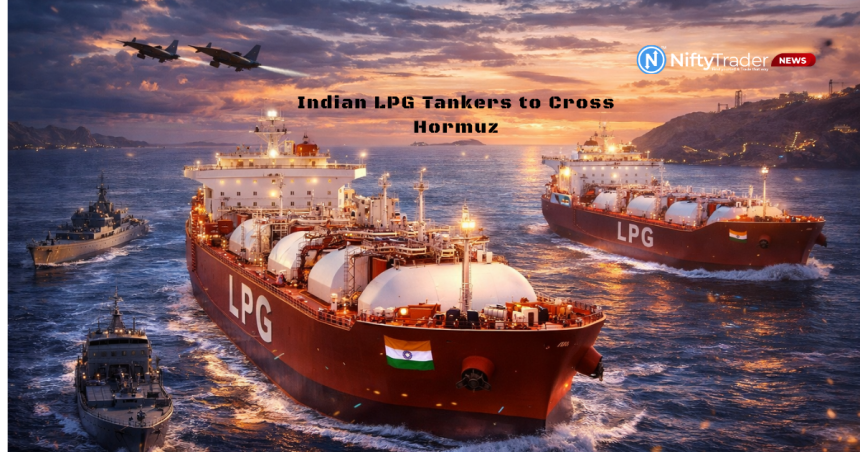
As Indian LPG tankers prepare to sail, escalating Gulf tensions put global energy supply chains under pressure
India has stepped up diplomatic efforts to ensure the safe movement of its vessels in the Gulf region, as tensions around the Strait of Hormuz intensify and begin to disrupt global shipping activity. The development comes at a particularly sensitive time, with two Indian LPG carriers preparing to navigate one of the world’s most strategically critical and volatile maritime corridors.
At the heart of the situation are Jag Vasant and Pine Gas, two Indian-flagged LPG tankers currently stationed near Sharjah. Both vessels have signaled readiness to sail, according to ship-tracking data, even as security risks in the region remain elevated.
This unfolding scenario is not just a shipping concern—it is a potential flashpoint for global energy markets, with direct implications for oil prices, inflation, and investor sentiment.
Also Check :
India pushes for “safe and unhindered movement” as geopolitical risks rise
India has made its position clear, emphasizing the need for uninterrupted maritime movement amid rising threats in the region.
Foreign ministry spokesperson Randhir Jaiswal stated, “We are in favour of safe and unhindered movement,” referring to India’s fleet of 22 vessels currently operating in the Gulf.
The statement underscores the scale of India’s exposure to the region and the urgency of the situation. Prime Minister Narendra Modi is reportedly in touch with global leaders, highlighting that the issue has escalated beyond operational concerns into a matter of strategic and diplomatic priority.
This coordinated approach reflects India’s reliance on secure sea routes for energy imports and the broader implications of any disruption.
LPG tankers signal readiness as uncertainty looms over their passage
The immediate focus remains on the two LPG carriers—Jag Vasant and Pine Gas—which could soon attempt transit through the Strait of Hormuz.
According to MarineTraffic data:
- Both vessels are positioned near Sharjah
- They are actively broadcasting signals indicating readiness to sail
- Departure could happen imminently, though timing remains uncertain
Industry sources suggest that the vessels may proceed cautiously, depending on evolving security conditions and advisories from authorities.
Importantly:
- Jag Vasant has been chartered by Bharat Petroleum Corporation Limited (BPCL)
- Pine Gas is operated by Indian Oil Corporation (IOC)
Neither company has issued an official statement, reflecting the sensitive and fluid nature of the situation.
Shipping disruption intensifies as Strait of Hormuz traffic slows sharply
The situation in the Strait of Hormuz has deteriorated following warnings from Iran that it could target vessels attempting to exit the Gulf.
This has had immediate consequences:
- No crude oil tankers reportedly transited the strait in the past 24 hours
- Hundreds of vessels are anchored, awaiting clarity on safety conditions
- A sanctioned crude tanker reversed course toward Iranian waters
The buildup of vessels highlights the growing risk aversion among global shipping operators, many of whom are reassessing transit plans amid escalating tensions.
Given that the Strait handles nearly 20% of global oil and LNG trade, even temporary disruptions can have outsized effects on global energy flows.
Here’s what happened today and why markets are reacting
The developments in the Gulf region have triggered heightened attention across financial markets:
- India called for safe passage of its 22 ships in the Gulf
- Two LPG tankers signaled readiness for transit through Hormuz
- Iran issued warnings targeting outbound vessels
- Shipping activity slowed sharply, with tanker movement nearly halted
- Vessel congestion increased significantly in the region
These events have introduced fresh uncertainty into energy markets, prompting traders and investors to closely monitor the situation.
Why the Strait of Hormuz is a global energy lifeline
The Strait of Hormuz is one of the most critical chokepoints in global trade, connecting major oil-producing regions in the Middle East to international markets.
For India, the importance is particularly acute:
- A large share of crude oil imports passes through this route
- Any disruption can significantly increase import costs
- Rising oil prices can fuel inflation and widen the current account deficit
For global markets:
- Even minor disruptions can trigger sharp price volatility
- Supply chain disruptions can ripple across industries
- Energy-sensitive sectors face immediate impact
This explains why geopolitical developments in the region often translate directly into market movements worldwide.
Impact on crude oil prices and broader market sentiment
While crude oil prices had recently shown signs of cooling, the renewed tensions have reintroduced upside risks.
If disruptions persist:
- Crude prices could spike sharply
- Inflation concerns may resurface globally
- Equity markets could face renewed volatility
Conversely, any signs of de-escalation or safe passage of vessels could stabilise prices and restore market confidence.
What does this mean for investors and trader portfolios?
The evolving situation has important implications for both traders and long-term investors.
For traders:
- Increased volatility in oil, gas, and shipping stocks
- Short-term trading opportunities driven by geopolitical news
- Higher sensitivity to real-time developments
For investors:
- Potential impact on inflation-sensitive sectors
- Energy stocks may outperform in the near term
- Broader market sentiment may remain cautious
Portfolio strategies are likely to tilt toward defensives until clarity emerges.
What lies ahead: A high-stakes situation with global implications
The coming days will be crucial in determining the trajectory of this situation.
Key developments to watch:
- Whether Jag Vasant and Pine Gas successfully transit the Strait
- Any escalation in military or geopolitical tensions
- Resumption or further slowdown of shipping activity
- Diplomatic interventions by global powers
Even a single disruption event could significantly alter the risk landscape for global markets.
The bigger picture: Geopolitics returns as a dominant market driver
The current situation underscores a broader reality—global markets remain deeply vulnerable to geopolitical flashpoints.
As one market expert noted, “Energy chokepoints like the Strait of Hormuz have disproportionate influence on global markets. Any disruption here can trigger immediate ripple effects across asset classes.”
Final takeaway: Energy security concerns take center stage
India’s call for safe passage highlights the growing importance of energy security in an increasingly uncertain global environment.
While the immediate focus remains on ensuring the safe movement of its vessels, the larger narrative is clear—geopolitical risks are once again shaping market direction.
For investors, this reinforces the need for vigilance, diversification, and a balanced approach as global uncertainties continue to evolve.