Eight stocks from the Nifty500 index closed below their 200-day moving averages on April 30, according to StockEdge.com’s technical scan data, flashing a negative signal across Blue Star, Waaree Energies, United Spirits, and five others. The 200 DMA, the most widely tracked long-term trend indicator in technical analysis, signals that a stock has fallen beneath its own one-year average price, a threshold institutional desks treat as a confirmed trend break. Here is what each breakdown means for the stock.
Also Read: Nestle May Raise Prices, Coal India Output Falls: 14 Stocks in Focus
BLUE STAR AND WAAREE — THE TWO THAT STAND OUT
Blue Star’s last traded price of ₹1,781 sits ₹52 below its 200 DMA of ₹1,833.52, a gap of approximately 2.8%. For an air conditioning and refrigeration company heading into peak summer, that is an uncomfortable place to be technically. Blue Star reported revenue of ₹2,410 crore in Q3FY26, with the room air conditioner segment growing 18% year-on-year. Peak summer is historically its strongest demand quarter; a stock breaking its 200 DMA precisely when business conditions should be providing chart support is a divergence that goes beyond routine selling. Q4FY26 results, expected in the third week of May, will be the first fundamental test of whether the chart weakness has a business reason behind it.
Waaree Energies closed at ₹3,118.8 against a 200 DMA of ₹3,126.44, a gap of just ₹7.64, making it the narrowest breakdown in the scan. The proximity cuts both ways. One session of buying reclaims the average. One session of continued selling confirms the breakdown. Waaree reported an order book of approximately 21 GW as of its last quarterly update, with revenue guidance pointing to strong FY27 execution. The fundamental pipeline is intact. The chart is sitting on the edge.
THE LIQUOR STOCKS
United Spirits closed at ₹1,325.6 against a 200 DMA of ₹1,357.38, a 2.3% gap, the second largest percentage decline in the scan after Blue Star. Allied Blenders and Distillers is in a different position entirely, with an LTP of ₹531.80 against a 200 DMA of ₹531.88. Eight paise below the average. Technically a breakdown, practically sitting on the line.
Two alcohol stocks appearing in the same negative breakout scan simultaneously is worth flagging. The consumer premiumisation narrative that has driven liquor stocks through FY25 and into FY26 is getting its first serious chart-level test. United Spirits has 2.3% of ground to recover before the signal clears. Allied Blenders needs a single session of buying.
FINANCIAL SERVICES AND THE OTHERS
Mahindra and Mahindra Financial Services closed at ₹310.7, below its 200 DMA of ₹316.9, a 2% gap. M&M Financial carries a loan book of approximately ₹1.08 lakh crore as of Q3FY26, with rural and semi-urban exposure accounting for over 80% of disbursements. NBFC stocks in the rural lending space have faced double pressure through FY26: rate cycle uncertainty and rural credit quality concerns following two uneven monsoon seasons. A lender of this scale breaking its 200 DMA is a technical signal with a fundamental context behind it.
Computer Age Management Services came in at ₹738.6 against a 200 DMA of ₹747.33, a 1.17% gap. CAMS processes roughly 68% of mutual fund industry transactions in India by value. Its revenues move directly with SIP flows and AUM levels. The broader mutual fund industry saw net equity inflows of ₹25,082 crore in March 2026, per AMFI data, and strong fundamentals at the industry level, but the stock is still below its long-term average. That gap between industry health and stock performance is the non-obvious detail here.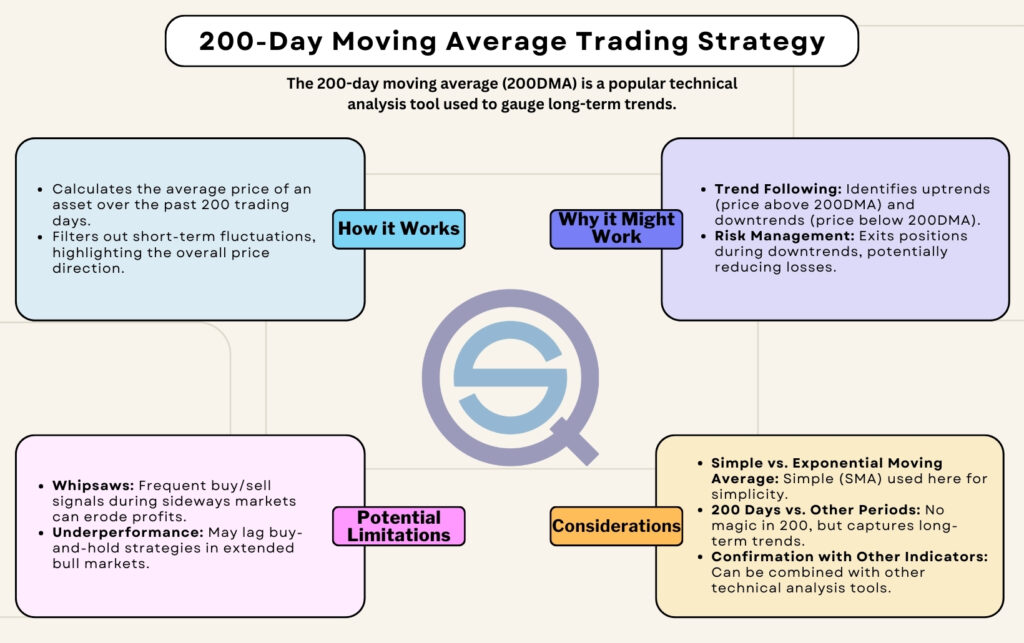
ITI Limited closed at ₹298.88, just ₹1.14 below its 200 DMA of ₹300.02. The ₹300 level is both a technical marker and a psychological one. Defence and telecom infrastructure stocks ran hard through most of FY26 on order inflow momentum. ITI sitting just below that level after a strong sectoral run suggests profit-booking rather than fundamental deterioration, but the chart signal is the chart signal.
The India Cements closed at ₹395.99 against a 200 DMA of ₹400.27. The cement sector dealt with volume pressure and pricing weakness through much of FY26, with average cement realisations declining approximately 3–4% year-on-year across the industry per India Ratings data. This breakdown is a continuation of an already weak chart, not a new development.
THE NON-OBVIOUS ANGLE
Eight stocks breaking the 200 DMA in one session across consumer durables, renewable energy, alcohol, NBFC, mutual fund services, defence, and cement is not a sector-specific story. Sector-specific breakdowns cluster in related names. This scan cuts across seven unrelated industries in a single session, which points to broad index-level selling on April 30 rather than any one sector under pressure.
StockEdge data shows that on a typical session through Q4FY26, between one and three Nifty500 stocks registered 200 DMA breakdowns per day. Eight in a single session on April 30 is more than double the recent daily average, a breadth reading that technical desks flag as a distribution signal rather than isolated weakness.
The three stocks closest to recovery, Waaree at ₹7.64 below, Allied Blenders at ₹0.08 below, and ITI at ₹1.14 below, will confirm or deny the signal in the first week of May. If they reclaim their 200 DMAs quickly, April 30 reads as a one-session event. If they do not, the breakdown hardens across the board.
Also Read: Nifty 500 Breakout Signal — Why Stocks Crossing 200 DMA Could Signal a Bigger Market Shift
Blue Star’s Q4FY26 results, expected in the third week of May, are the single most important fundamental trigger for this group. If the AC major reports strong summer demand numbers and the stock fails to reclaim ₹1,833 before or after the result, the 2.8% gap below the 200 DMA becomes a technically confirmed medium-term breakdown. Watch the first five sessions of May for the narrow-gap trio, Waaree, Allied Blenders, and ITI, before drawing conclusions on the broader April 30 signal.
FAQ
What does it mean when a stock crosses below its 200 DMA?
It means the stock’s current price has fallen below its average closing price over the last 200 trading sessions, approximately one full year. It is the most widely used long-term trend indicator in technical analysis. A close below the 200 DMA is treated as a negative signal by institutional and retail traders alike. Source: StockEdge.com technical scan methodology.
Which of the eight stocks is furthest below its 200 DMA?
Blue Star has the largest percentage gap, LTP of ₹1,781 versus 200 DMA of ₹1,833.52, approximately 2.8% below. United Spirits is next at 2.3% below its 200 DMA of ₹1,357.38, with an LTP of ₹1,325.6. M&M Financial follows at 2% below. Source: StockEdge.com, April 30 closing data.
Which stocks are closest to recovering above their 200 DMA?
Allied Blenders is just ₹0.08 below its 200 DMA of ₹531.88. ITI is ₹1.14 below its 200 DMA of ₹300.02. Waaree Energies is ₹7.64 below its 200 DMA of ₹3,126.44. All three are in single-session recovery range. Source: StockEdge.com, April 30 closing data.