Varun Beverages Chairman Ravi Jaipuria disclosed on the company’s Q1 FY26 earnings call that Campa Cola, Coca-Cola, and PepsiCo are together deploying close to 500,000 commercial visi-coolers across Indian retail outlets, the largest single-cycle refrigeration push the country’s beverage sector has seen in over a decade. On top of that, retail outlets themselves are independently adding another 400,000 to 500,000 coolers, Jaipuria said, putting total new units entering the market at close to one million.
Why the Cola War Is Really a Refrigerator War
The strategic logic is simple: in a market built on tens of millions of small-format kirana stores, most of which have no built-in refrigeration, the brand that installs a cooler does not merely win shelf space. It owns the cold section entirely.
“Every brand wants to put this, whether you are a Coke or a Pepsi,” said Arvind Singhal, chairman of retail consultancy The Knowledge Company. “Of course it helps when there’s a fight.”
That fight intensified after Reliance Consumer Products Ltd. launched Campa Cola in 2023 at ₹10 a bottle, approximately $0.12, targeting price-sensitive consumers in Tier 2 and Tier 3 cities where Coca-Cola and PepsiCo had historically maintained thinner distribution networks. The move compelled both American multinationals to invest aggressively in markets they had underserved.
Campa Cola’s Revenue Now Within ₹5 Billion of Coca-Cola India
Also Read: RELIANCE INDUSTRIES NSE Stock Price Today
The competitive stakes are no longer theoretical. The table below captures the current revenue positioning of the three major players for FY2025:
| Brand | FY2025 Revenue (India) | Source |
|---|---|---|
| Coca-Cola India | ₹51.7 billion (~$615M) | Tofler (regulatory filings aggregator) |
| Campa Cola (Reliance) | ₹47.0 billion (~$559M) | Reliance investor presentation |
| PepsiCo India (bottled via Varun Beverages) | Not separately disclosed | — |
Campa Cola, which did not exist as a commercial brand before 2023, has closed to within ₹4.7 billion of Coca-Cola India’s full-year revenue in under two years of operations. Reliance states Campa now holds double-digit market share in key markets and ranks as India’s fourth-largest carbonated soft drink brand by volume.
Note: Coca-Cola India revenue is sourced from Tofler, a secondary data aggregator compiling regulatory filings, not from Coca-Cola’s official investor disclosures. This figure should be treated as indicative.
India’s Commercial Refrigerator Market: Size, Growth, and Key Players
India’s commercial refrigerator market, covering visi-coolers and display units deployed in retail, was valued at $2.8 billion in 2025 and is projected to reach $3.9 billion by 2034, according to market research firm IMARC Group. That is a compound annual growth rate of approximately 3.7%.
Blue Star Ltd., one of the two primary listed Indian beneficiaries of this cycle, confirmed the cooler segment is expanding faster than the company’s own overall annual revenue growth rate. In its most recent earnings, Blue Star reported consolidated revenue growth of approximately 25% year-on-year. The company’s Unitary Cooling Products division, which includes commercial refrigeration, has outpaced even that figure, according to Mohit Sud, the division’s group president, who called it a “future-facing segment” with structural demand and still-low penetration across large parts of the country.
Voltas Ltd. (Tata Group) is the second major listed beneficiary. Unlisted players with significant exposure include Haier Appliances India and Western Refrigeration.
Varun Beverages Goes Upstream: Manufacturing Its Own Coolers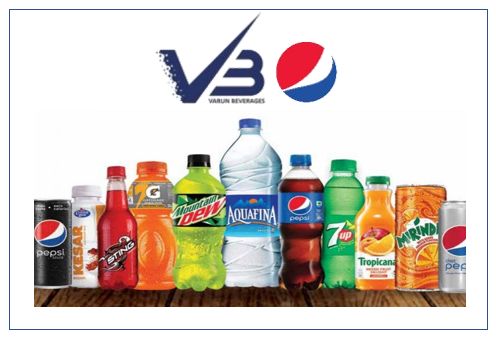
The most structurally significant development in this cycle is not how many coolers are being deployed; it is who is making them.
Varun Beverages entered a joint venture with Everest International Holdings in FY2025 to manufacture visi-coolers and commercial refrigeration units in-house. The move transforms Varun from a buyer of refrigeration equipment into a producer of it, compressing its unit economics on a capital expenditure line that runs into hundreds of millions of rupees annually. The JV’s production capacity targets and total investment size have not been publicly disclosed.
This is a structural shift in the cola-to-cooler supply chain, not a one-cycle spend event.
Summer 2025 Adds a Near-Term Demand Accelerant
India’s summer in 2025 has tracked above historical averages, according to the India Meteorological Department (IMD), which flagged above-normal temperatures across central and western India through May and June. Crisil Ratings noted last month that sustained high temperatures support continued beverage company spending on both production capacity and visi-cooler deployment through the season, extending the cooler deployment cycle into Q2 FY26 rather than compressing it into Q1 alone.
For refrigerator manufacturers, this represents a near-term revenue tailwind layered on top of the multi-year structural growth story.
The Supply Chain Risk: Iran Conflict and Component Costs
One risk receiving insufficient attention in earnings commentary is the ongoing Iran conflict and its effect on Middle Eastern trade routes used by commercial refrigeration component suppliers. Several inputs used in visi-cooler manufacturing, including compressors, copper tubing, and refrigerant components, move through or near affected corridors.
As of Q1 FY26, no Indian cooler manufacturer has publicly quantified its exposure in terms of specific components, supplier names, or affected trade routes. Until that disclosure is made, the risk remains a known unknown. Should disruptions deepen heading into Q2, input cost inflation could compress margins even as volume growth continues, a scenario worth monitoring in the next round of earnings commentary from Blue Star and Voltas.
Competitive Outlook: Who Wins the Kirana Cold Section?
Jaipuria’s own framing of the competitive dynamic is the clearest summary available: “Whoever does a good go-to-market and whoever can expand his distribution will win the game.”
By that measure, Campa Cola’s structural advantage is Reliance’s existing distribution infrastructure across Tier 2 and Tier 3 India, the same network that moved Jio SIM cards and JioMart grocery orders to markets that multinational FMCG brands had underserved for decades. Coca-Cola’s and PepsiCo’s advantage is brand equity, global formulation consistency, and the financial depth to sustain a prolonged infrastructure deployment war.
The cooler count will be a leading indicator. Watch Blue Star and Voltas order books in Q2 FY26 earnings for the next data point.
Read Next: JSW Energy Falls 8% as Shareholder Profit Drops 8% in Q4FY26
FAQ
Is Campa Cola bigger than Coca-Cola in India now?
Not yet. For FY2025, Coca-Cola India posted ₹51.7 billion in revenue (per Tofler) versus Campa Cola’s ₹47 billion (per Reliance’s investor presentation). The gap is approximately ₹4.7 billion and narrowing faster than most analysts projected two years ago.
Which refrigerator companies benefit most from India’s cola war?
Blue Star and Voltas are the two primary listed Indian beneficiaries. Unlisted players include Haier Appliances India and Western Refrigeration. Varun Beverages is also manufacturing coolers directly via its JV with Everest International Holdings, reducing its dependency on third-party suppliers.
Will Campa Cola beat Coke in India?
Campa’s trajectory, ₹47 billion in revenue in under two years, is exceptional. However, Coca-Cola’s brand equity, cold chain investment history, and global resources make a near-term revenue overtake unlikely. The more realistic scenario is Campa consolidating double-digit market share in value-tier and regional markets while Coke defends premium and urban segments.