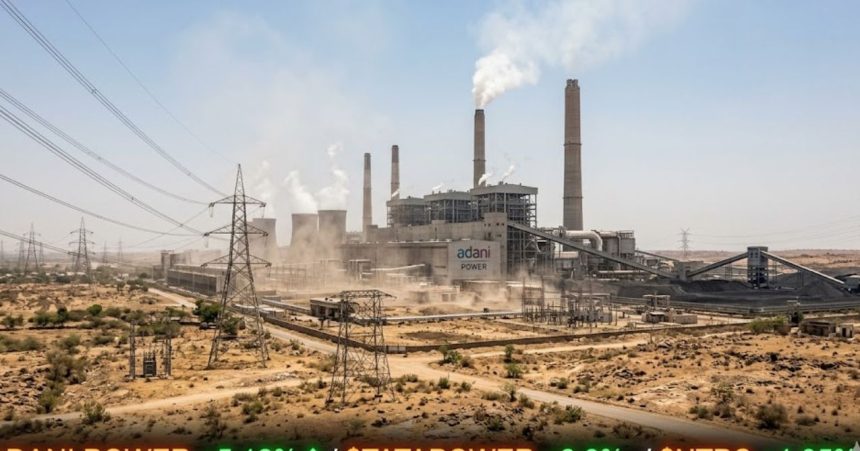
Adani Power Ltd. hit a fresh all-time high of ₹216.50 on April 22, 2026, closing at ₹215.65, up ₹12.67 from the previous session as 43 million shares changed hands across NSE and BSE combined, according to exchange data. The stock has surged 44% in April alone, pushing market capitalisation past ₹4.15 lakh crore for the first time. Three simultaneous shocks drove the move: Delhi recorded 38.2°C on April 17, its hottest day of the year; India’s gas-based power generation collapsed from 12 GW to just 2 GW after the Iran–US conflict disrupted LNG supply chains; and a US court accepted dismissal pleas in regulatory cases against Adani Group, lifting an overhang that had suppressed the stock since November 2024.
The Signal Investors Are Missing
Before assessing the upside, one number demands attention. On April 21, delivery volume shares held overnight rather than squared off intraday fell 26.62% below its five-day average, even as total traded value hit ₹429.21 crore, per MarketsMojo. Institutional holdings stand at just 15.42% of the float. The rally is being driven by momentum traders, not long-term institutional accumulation. That distinction becomes critical when the seasonal catalyst fades.
Why Coal Is Winning This Summer
Gas-based generation has dropped 83% from 12 GW to 2 GW, leaving coal as the only dispatchable baseload available after sunset when air-conditioning demand peaks. Adani Power operates India’s largest private thermal fleet at 18.15 GW across 11 plants. The Central Electricity Authority (CEA) projects peak national demand could hit 275–285 GW this summer, up from 250 GW in 2024, and the government has mandated coal plants to run at full capacity. India holds 220 million tonnes of coal in national reserves, roughly 24 days of generation cover, reducing the risk of an acute supply shock.
The critical watch metric is not national inventory but Coal India’s daily rake dispatch. In the 2023 El Niño summer, rake shortfalls caused localised generation deficits even when aggregate inventory looked adequate. JM Financial Institutional Equities projects evening peak-hour power deficits from mid-May through September 2026, mirroring that pattern. The CEA’s daily generation monitoring report is the real-time earnings signal investors should track.
Earnings Reality vs. Market Expectations
The rally is a bet on future earnings, not recent ones. In Q3 FY26, Adani Power reported revenue of ₹12,994 crore and net profit of ₹2,488 crore, down year-on-year, with the company attributing the decline to lower one-time income in the prior quarter. Its own management disclosed a double-digit drop in market-clearing prices and flat year-on-year power pricing. JM Financial flags a potential further profit decline in Q4 FY26. The summer demand thesis is a Q1 FY27 story, not a trailing-results one.
On the structural side, CRISIL assigned an AA/Stable rating to ₹69,000 crore of Adani Power’s credit facilities on April 1, 2026. That same day, the company received a Letter of Award from MSEDCL for 2,500 MW of round-the-clock power supply over 25 years. Combined with PPAs covering 95% of operating capacity, the revenue base is substantially de-risked even if merchant prices disappoint.
Valuation: Priced for Perfection
At ₹215.65, Adani Power trades at a trailing P/E of 34.7x and EV/EBITDA of 21.6x, per Dhan and MarketsMojo closing data on April 22. NTPC trades at 14.4x P/E and 10.9x EV/EBITDA; Tata Power at 32.5x P/E and 13.4x EV/EBITDA. Adani Power’s own 5-year average P/E was 11.43x; today’s multiple represents a 204% premium to that historical norm. The 5-year ROE of 27.38% and net debt-to-equity of 0.65x are genuine strengths, but at 34.7x earnings with profit declining year-on-year, there is no margin for error on the summer demand call.
An international brokerage initiated with Outperform and a ₹177 target on March 25, a level the stock crossed by April 14. Technical analysts set near-term targets of ₹210–₹230, with support at ₹175 and a stop-loss at ₹160.
The fundamental setup is real: 18.15 GW of coal-fired capacity, 95% PPA coverage, AA/Stable CRISIL rating, a 25-year MSEDCL contract, and zero LNG exposure in a market where gas generation has collapsed. But the stock has moved 44% in one month, delivery volumes are falling while price hits new highs, and trailing earnings are declining. At 34.7x P/E, more than double NTPC’s multiple, investors are paying for a perfect summer. Watch Coal India’s daily rake dispatch data. If supply reaches the plants, the bull case earns its premium. If it doesn’t, the trade unravels fast.
Nuclear: Two Subsidiaries in Seven Days
Adani Power incorporated Coastal-Maha Atomic Energy Ltd. (CMAEL) on April 13, 2026, and Rawatbhata-Raj Atomic Energy Ltd. (RRAEL) on April 20, two nuclear holding entities in seven days, both under wholly owned subsidiary Adani Atomic Energy Ltd., per BSE filings dated April 19 and April 21, respectively. Each carries ₹5 lakh in authorised capital. These are shells requiring years of regulatory clearance from India’s Atomic Energy Regulatory Board. Rising oil prices above $100 per barrel reinforce coal’s current competitive advantage over LNG-dependent generation, adding a further tailwind to Adani Power’s thermal fleet while nuclear capacity remains years away from commissioning.
Also Read: HSBC Cuts India to Underweight as Brent Oil Tops $100
Frequently Asked Questions
Why is Adani Power rising so sharply in April 2026?
Three catalysts: India’s hottest early summer in years (Delhi at 38.2°C on April 17); an 83% collapse in gas-based generation due to the Iran–US conflict disrupting LNG supply; and a US court’s acceptance of dismissal pleas in Adani Group regulatory cases, removing a major overhang that had held the stock back since November 2024.
Is Adani Power expensive at current levels?
Yes, relative to peers and its own history. At 34.7x trailing P/E versus NTPC’s 14.4x and its own 5-year average of 11.43x, the stock is priced for a strong summer with no earnings miss tolerated.
What is the Adani Power price target for 2026?
Analyst targets range from ₹177 to ₹230. Technical analysts set ₹210–₹230 as the near-term target with a ₹160 stop-loss. An international brokerage’s ₹177 Outperform target set on March 25 was crossed by April 14. Bear-case Fibonacci support sits at ₹103 if summer demand disappoints.
What are the key risks?
Valuation at 34.7x P/E with declining trailing earnings; a cooler-than-expected summer removing the demand catalyst; Iran conflict resolution restoring gas flows; and ongoing US SEC and DOJ investigations into alleged bribery involving Adani Group executives—allegations the group consistently denies.