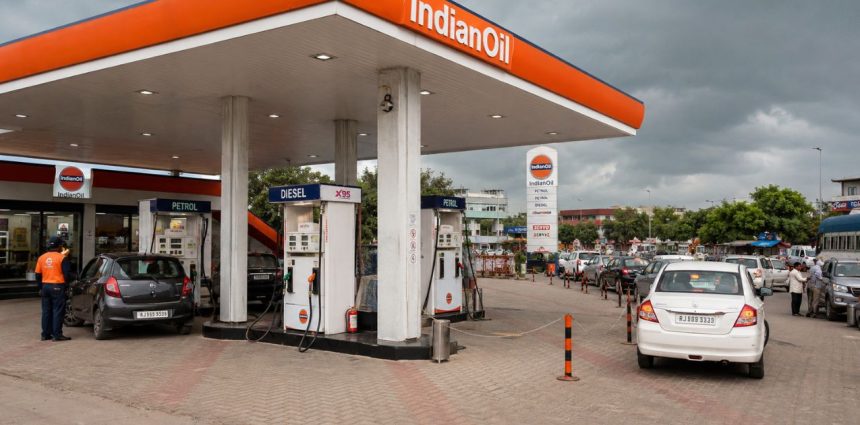
India’s petroleum ministry has imposed a retail fuel access curb on industrial and commercial users, barring them from purchasing fuel at retail pumps. The move follows a ₹39/litre diesel price gap that triggered abnormal demand distortion, with the resulting cost shock now spreading across logistics, telecom, and construction sectors.
Key Takeaways
- On June 11, 2026, the Ministry of Petroleum and Natural Gas issued the Motor Spirit and High Speed Diesel (Temporary Regulation of Supply through Retail Outlets) Order, 2026, valid for up to 90 days.
- Industrial, commercial, and institutional users are barred from retail petrol pumps; mandatory shift to bulk supply channels effective immediately.
- Core trigger: retail diesel at ₹95.20/litre (Delhi) vs. bulk diesel at ₹134.50/litre, a ₹39.30/litre arbitrage that caused abnormal demand surge at retail outlets, creating supply stress risk for common consumers.
- Diesel retail purchases capped at 200 litres/customer/day; resale strictly prohibited under the Essential Commodities Act.
- Industries face up to 41% diesel cost shock overnight; logistics and construction sectors carry the highest disruption and cost pass-through risk.
- Crude oil volatility remains the key variable: any escalation in West Asia tensions could extend the 90-day window and widen the retail-bulk gap further.
- The retail fuel access curb marks a significant shift in India’s fuel distribution system, especially for bulk industrial buyers.
Why the Government Acted: A ₹39 Gap That Broke the System
The retail fuel access curb was triggered by a widening ₹39/litre diesel arbitrage that disrupted normal fuel demand patterns. India’s fuel distribution crisis did not begin with a shortage; it began with a pricing gap.
After the West Asia conflict escalated in late February 2026, state-owned oil marketing companies, Indian Oil, HPCL, and BPCL, held retail pump prices below cost to protect ordinary consumers from global price shocks. Bulk buyers, however, continued to be charged market-linked rates.
The result was a structural arbitrage of ₹39.30 per litre on diesel alone.
Check here: INDIAN OIL CORPORATION Option Chain: Live NSE OI, …
Retail vs. Bulk Fuel Pricing — Delhi, June 2026
| Fuel | Retail Pump Price | Bulk Sale Price | Price Gap |
|---|---|---|---|
| Diesel (HSD) | ₹95.20/litre | ₹134.50/litre | ₹39.30/litre (+41%) |
| Petrol (MS) | Administered (capped) | Market-linked | Significant |
Source: Ministry of Petroleum and Natural Gas Order, June 11, 2026
Telecom tower operators, logistics fleets, construction companies, power backup operators, and industrial units, all legally required to procure at bulk rates, started routing purchases through retail pumps instead. Demand at certain retail outlets surged abnormally.
The structural problem: retail pumps are designed for dispersed individual consumer demand, not concentrated institutional lifting. When bulk buyers flood retail forecourts, localised stock depletion, queues, and supply stress for ordinary consumers follow rapidly. That is precisely what the government moved to prevent.
What the Order Restricts: Exact Rules
Under the retail fuel access curb, industrial and commercial users are no longer allowed to access retail fuel pumps. New compliance framework under the June 11 Order:
| Rule | Detail |
|---|---|
| Who is barred | Industrial, commercial, institutional consumers |
| Where they must go | Designated bulk sale points or own consumer pumps |
| Diesel retail cap | 200 litres per customer/vehicle per day |
| Container requirement | PESO-approved containers only |
| Resale | Strictly prohibited |
| Enforcement authority | OMCs, state govts, UT administrations |
| Penalty | Essential Commodities Act — up to 7 years imprisonment + fines + stock confiscation |
| Duration | Up to 90 days; extendable via fresh government order |
State governments have been explicitly directed to act against hoarding, black marketing, unauthorised procurement, and diversion of fuel supplies.
Sector Impact: Cost Shock and Disruption Risk
Industry Impact Assessment — Post June 11 Order
| Sector | Fuel Cost Shock | Disruption Risk | Key Concern |
|---|---|---|---|
| Telecom (DG towers) | High (+41% diesel) | Medium | Opex spike, bulk infra gaps in Tier-2/3 cities |
| Logistics & Transport | High (+41% diesel) | High | Fare pass-through likely within 1–2 quarters |
| Construction & Mining | High (+41% diesel) | Medium-High | Fleet cost restructuring, project cost inflation |
| Power Backup (industrial) | High (+41% diesel) | Medium | Contract renegotiation with bulk suppliers needed |
| Retail consumers | Nil | Low | 200-litre/day cap — minimal real-world impact |
Source: NiftyTrader analysis based on Ministry of Petroleum and Natural Gas Order
The cost shock is not theoretical. Industries that exploited the ₹39/litre gap face an overnight fuel cost increase of up to 41% on diesel. For logistics operators, where diesel is the single largest variable cost, this is a direct margin compression event.
Macro Transmission: Where This Hits the Broader Economy
This is not just a fuel distribution story. It carries direct macro implications that market participants should track.
Inflation pass-through risk is real. Diesel feeds directly into India’s logistics cost structure, trucking, last-mile delivery, and cold chains. A sustained 41% diesel cost increase for commercial operators typically translates into upward pressure on freight rates within one to two quarters, which then flows into CPI through food and manufactured goods supply chains.
Fuel’s weight in the inflation basket matters. Diesel is a key input in India’s WPI and an indirect driver of CPI through transport costs. If bulk operators pass even 30–40% of the cost shock downstream, the inflationary transmission becomes measurable at a macro level, relevant for RBI policy watchers tracking the June–September inflation trajectory.
Crude oil remains the master variable. The retail-bulk gap exists because OMCs absorbed the crude price spike rather than passing it to retail consumers. If Brent crude rises further or West Asian tensions escalate, the gap could widen, making even the current order insufficient and increasing the probability of an extension beyond 90 days.
Operational Friction: The Readiness Gap No One Is Talking About
The retail fuel access curb has created immediate compliance pressure for mid-sized industrial operators lacking bulk infrastructure. Policy intent and on-ground readiness are two different things.
Not all mid-sized industrial operators maintain dedicated bulk storage infrastructure or have active bulk supplier contracts. For construction companies, small logistics players, and Tier-2/3 city operators, the sudden mandatory shift to bulk procurement channels creates an immediate gap in storage capacity, vendor onboarding, and billing systems.
This mismatch between regulatory mandate and ground-level infrastructure readiness carries a short-term disruption risk that is separate from the pricing shock. Businesses that cannot immediately access bulk supply channels face operational disruption until new arrangements are in place.
Forward Risk Assessment
| Risk Factor | Probability | Trigger Condition |
|---|---|---|
| 90-day order extended | Medium-High | Crude spike or continued West Asia escalation |
| Logistics freight rate increase | High | Already absorbing 41% diesel cost shock |
| Localised retail supply stress (Tier-2/3) | Medium | Thin bulk infrastructure + enforcement gaps |
| Inflation pass-through (CPI) | Medium | If freight costs rise 8–12% over next 2 quarters, |
| OMC retail price hike | Low-Medium | Only if crude stabilises at elevated levels long-term |
Essential Commodities Act: Penalties at a Glance
Violations of the June 11 order are punishable under the Essential Commodities Act and can include imprisonment of up to seven years, monetary fines, and confiscation of illegally procured fuel stock. State governments are empowered to act against all four categories of malpractice: hoarding, black marketing, unauthorised procurement, and diversion.
Bottom Line
India’s June 11 fuel order is a precise, targeted intervention, closing a ₹39/litre arbitrage that was distorting retail supply, not a signal of structural fuel shortage. For retail consumers, daily life changes little.
For industry, the cost shock is immediate and significant: a 41% diesel cost jump overnight. The downstream risk, logistics fare inflation, construction cost pressure, and potential CPI pass-through make this a macro event worth tracking, not just a regulatory footnote.
The 90-day window is the critical variable: if crude remains volatile, expect an extension. Watch Brent crude, OMC pricing decisions, and RBI’s August inflation commentary as the three leading signals.
Also Read: Govt Cuts Windfall Tax on Petrol, Diesel Exports From June 1; Oil Stocks Back in Focus
FAQs
Q1. Who is barred from retail petrol pumps under this order?
All industrial, commercial, and institutional consumers, including telecom DG tower operators, logistics fleets, factories, construction companies, and power backup operators. Retail consumers filling personal or commercial vehicle tanks remain largely unaffected, subject to the 200-litre/day diesel cap.
Q2. Why did this pricing gap open up in the first place?
After the West Asia crisis in late February 2026, state-owned OMCs held retail prices below cost to shield consumers, while bulk pricing continued tracking market rates. The ₹39.30/litre differential that resulted was large enough to make retail pumps financially irresistible for bulk buyers.
Q3. Will this push up consumer prices indirectly?
Yes, the risk is real. Logistics operators facing a 41% diesel cost spike are likely to pass a portion downstream into freight rates within one to two quarters. This feeds into CPI through food supply chains, manufactured goods transport, and last-mile delivery costs.
Q4. How long does this order last, and can it be extended?
Up to 90 days initially. The government can issue a fresh order to extend it. The most likely extension trigger is sustained crude oil price volatility or renewed escalation in West Asia tensions.
Q5. What are the penalties for violating this order?
Violations are punishable under the Essential Commodities Act: up to seven years imprisonment, fines, and confiscation of illegally procured fuel. State governments are also empowered to act against hoarding and black-market diversion.
Q6. Can specific industries get an exemption?
Yes. The order explicitly allows the government to exempt any consumer, class of consumers, area, or transaction category through a special notification.
Data as of June 11, 2026 | Source: Ministry of Petroleum and Natural Gas, Motor Spirit and High Speed Diesel (Temporary Regulation of Supply through Retail Outlets) Order, 2026
Disclaimer: This article is for informational purposes only and does not constitute investment advice. Please consult a qualified financial advisor before making any investment decisions.