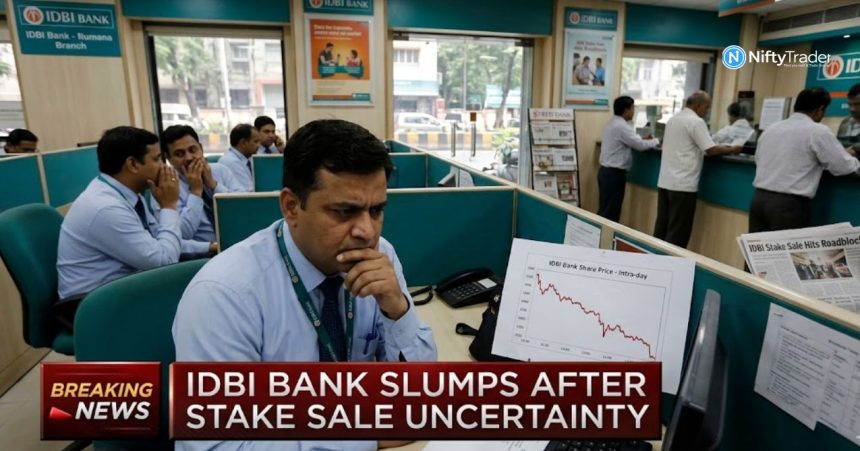
Shares of IDBI Bank plunged sharply in early trade after reports suggested the Indian government may cancel the current bidding process to sell its majority stake in the lender.
The sudden uncertainty triggered an immediate market reaction, with the stock falling roughly 13–15% intraday and touching near ₹78 compared with the previous close around ₹92, marking one of its steepest single-day declines in recent months.
For investors, the issue is no longer just the sale itself. The bigger concern is whether delays in privatization could reshape expectations around the bank’s valuation and the government’s broader disinvestment roadmap.
What Triggered the Sudden Selloff
The sharp drop followed reports that the government may scrap the current bidding round for selling a controlling stake in IDBI Bank, a privatization process that has been underway since 2022.
The key problem appears to be a valuation gap.
According to reports:
-
Financial bids submitted by potential buyers reportedly fell below the government’s reserve price
-
Authorities are considering cancelling the current sale process
-
If revived later, the entire bidding process may need to restart from the beginning
Importantly, there has not yet been an official confirmation from the Finance Ministry, which means policy uncertainty remains high, a key reason markets reacted aggressively.
Why Investors Reacted So Quickly
Privatization expectations had become one of the largest valuation drivers for the stock.
The proposed deal involved selling about 60.7% of the bank, currently held jointly by the government and Life Insurance Corporation of India, along with management control.
Ownership Structure Before the Proposed Sale
| Shareholder | Stake |
|---|---|
| Government of India | ~45.48% |
| Life Insurance Corporation of India | ~49.24% |
Together they control over 94% of the bank, meaning a successful sale would represent a dramatic shift in ownership, governance, and strategic direction.
When reports suggested the deal might collapse, investors rapidly repriced the stock to reflect the loss of a key catalyst.
Who Were the Potential Buyers?
The privatization process had reportedly narrowed to two major contenders:
-
Fairfax Financial Holdings
-
Emirates NBD
However, their financial bids reportedly did not match the government’s minimum valuation expectations, creating an expectation gap between seller pricing and buyer appetite.
Without a competitive offer at the expected price, policymakers appear reluctant to proceed with the sale under current conditions.
Why This Matters for Markets Beyond One Bank
The implications extend far beyond a single stock.
1. Disinvestment Strategy Faces a Reality Check
The privatization of IDBI Bank has been one of the most closely watched asset sales in India’s disinvestment pipeline.
If the deal stalls, the government may need to recalibrate pricing expectations or restructure future stake sales in public-sector companies.
2. Banking Sector Reform Signals May Slow
Investors had viewed the deal as a potential signal that India might accelerate private ownership in the banking system.
A stalled transaction could delay expectations around the following:
-
Additional bank privatizations
-
Strategic foreign investment in Indian lenders
-
Sector consolidation opportunities
3. Valuation Gap Becomes Visible
The situation highlights a key market tension: government valuation expectations versus investor willingness to pay.
If the gap persists, future privatization deals could face similar hurdles.
What Traders Will Watch Next
The next few developments will determine whether the selloff stabilizes or extends further.
Key signals to monitor include:
-
Whether the government officially cancels the current bidding round
-
Any new timeline for restarting the privatization process
-
Fresh strategic interest from additional bidders
-
Policy commentary from the Finance Ministry
If authorities eventually relaunch the sale, it could occur under revised valuation expectations or modified deal structures.
The Bottom Line
The sharp drop in IDBI Bank shares underscores how heavily the stock’s narrative had become tied to privatization hopes.
With those expectations suddenly uncertain, investors are reassessing the bank’s near-term outlook.
Until policymakers clarify whether the stake sale will be revived, renegotiated, or postponed, volatility in the stock could remain elevated, especially as markets weigh the forward-looking risk that the privatization timeline may stretch longer than previously anticipated.
FAQs
1. Why did IDBI Bank shares fall sharply today?
Shares of IDBI Bank dropped after reports suggested the Indian government may scrap the current bidding process to privatize the bank. Investors had priced in privatization as a major catalyst, so uncertainty about the deal triggered heavy selling.
2. What stake in IDBI Bank was the government planning to sell?
The planned transaction involved selling about 60.7% of the bank, jointly held by the Government of India (around 45.48%) and Life Insurance Corporation of India (around 49.24%), along with management control.
3. Who were the potential buyers for IDBI Bank?
Two major bidders reportedly remained in the race:
-
Fairfax Financial Holdings
-
Emirates NBD
However, their bids reportedly fell below the government’s reserve price, creating an expectation gap between seller valuation and investor appetite.
4. Is the IDBI Bank privatization officially cancelled?
Not yet. Reports indicate the government may cancel the current bidding round, but an official announcement has not been confirmed. Authorities could restart the process later under revised terms.
5. Why is the IDBI Bank privatization important for India’s markets?
The sale is seen as a flagship privatization under India’s disinvestment program. If delayed or scrapped, it may raise uncertainty around future government stake sales in banks and other state-owned companies.
6. Could IDBI Bank privatization happen again later?
Yes. Officials may restart the sale when market conditions improve or if new bidders emerge. However, a future deal could involve lower valuation expectations or revised bidding conditions.
7. What should investors watch next in the IDBI Bank story?
Key signals include:
-
Official confirmation from the finance ministry
-
Whether a new bidding round is announced
-
Interest from additional strategic investors
-
Any policy shift in India’s bank privatization strategy
These factors will determine whether the current selloff stabilizes or evolves into a longer re-rating of the stock.