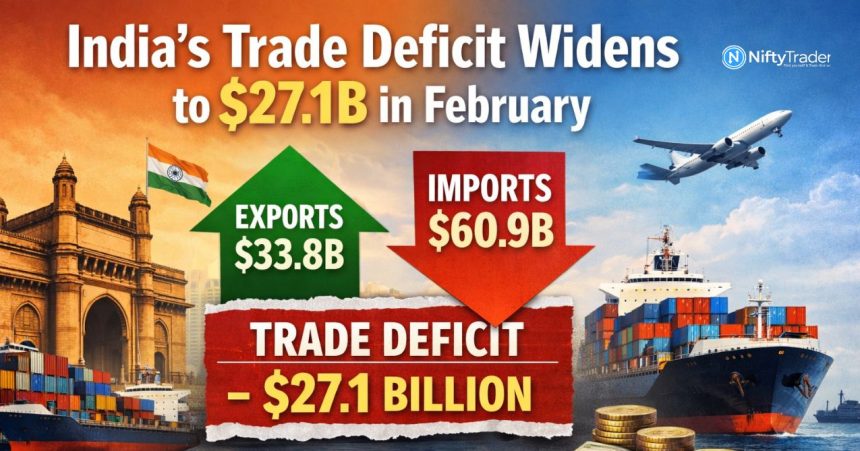
India’s external trade balance deteriorated sharply in February, as rising imports and global uncertainties pushed the country’s merchandise trade deficit to $27.1 billion, almost double the $14.4 billion gap recorded a year earlier. The widening deficit is drawing fresh attention from currency traders, policymakers, and equity markets watching global supply disruptions.
Government data shows exports stood at $36.61 billion while imports climbed to $63.71 billion, highlighting a growing gap between what India sells abroad and what it buys from global markets.
For markets, the data matters because trade balances often influence currency trends, inflation expectations, and sector-specific stock movements.
What Changed in the Latest Trade Data
The February numbers signal that import growth is still running ahead of export momentum, widening the trade imbalance.
Key numbers from February trade data
-
Trade deficit: $27.1 billion
-
Exports: $36.61 billion
-
Imports: $63.71 billion
-
Deficit in Feb last year: $14.42 billion
The sharp expansion indicates external pressures on India’s balance of payments, particularly when global geopolitical risks and tariff disputes are intensifying.
Why Markets React to Trade Deficit Data
A widening trade deficit can influence several market variables:
1️⃣ Currency pressure
Higher imports increase demand for foreign currency, which can weigh on the rupee over time.
2️⃣ Inflation risks
If deficits widen due to energy imports or commodities, domestic inflation expectations may rise.
3️⃣ Policy implications
Persistent deficits can shape monetary policy outlook and capital flow dynamics, especially if they begin to affect the current account.
Global Risks Adding to the Trade Imbalance
The February data comes amid a complex global backdrop.
Tariff uncertainty
Ongoing trade tensions and tariff risks between major economies are adding unpredictability to global trade flows.
Middle East tensions
Geopolitical instability involving Iran has pushed up energy prices and shipping risks, factors that can increase India’s import bill.
India imports over 80% of its crude oil, making its trade balance particularly sensitive to energy price spikes or supply disruptions.
Sector Implications Investors Are Watching
Energy and oil marketing companies
Higher crude prices can increase import costs and influence refining margins.
Aviation and logistics
Rising fuel prices and shipping disruptions can affect operating costs.
Export-heavy sectors
Industries such as IT services, engineering goods, and pharmaceuticals remain critical because stronger exports can offset import pressure.
Metals and commodities
Higher global commodity prices may both support exporters and increase import bills.
The Bigger Macro Picture
India’s trade deficit has already shown volatility this year.
For example, January saw the deficit widen to $34.7 billion due to rising imports such as precious metals.
The February number, while smaller than January’s peak, still highlights how import-driven pressures remain a key macro variable for markets.
What Traders Should Watch Next
Market participants will closely monitor:
-
Oil prices and Middle East tensions
-
Currency movement in the rupee
-
Export demand from the US and Europe
-
Upcoming trade and tariff policy developments
If import growth continues to outpace exports, the trade gap could remain a key macro driver for currency and equity sentiment in the coming months.
Bottom Line
The $27.1 billion trade deficit in February 2026 is real and government‑reported, reflecting ongoing external imbalances. While import growth outpaced exports, markets are now also pricing in global geopolitical risks and tariff uncertainty that could amplify currency and inflation pressures if trends persist.
Frequently Asked Questions
Q1: What was India’s trade deficit in February 2026?
India’s merchandise trade deficit stood at $27.1 billion in February 2026, nearly double the deficit from the same month a year earlier.
Q2: Why did the trade deficit widen in February?
The gap widened as imports including gold, metals, and other commodities grew faster than exports, increasing overall foreign currency outflows.
Q3: Does a larger trade deficit hurt the rupee?
Yes, persistent deficits can put downward pressure on the rupee, as more foreign currency is needed to pay for imports than is earned from exports.
Q4: How does the trade deficit affect inflation and markets?
Higher import bills, especially for energy or commodities, can influence inflation expectations and corporate costs, while currency weakness may affect equity and fixed‑income markets.