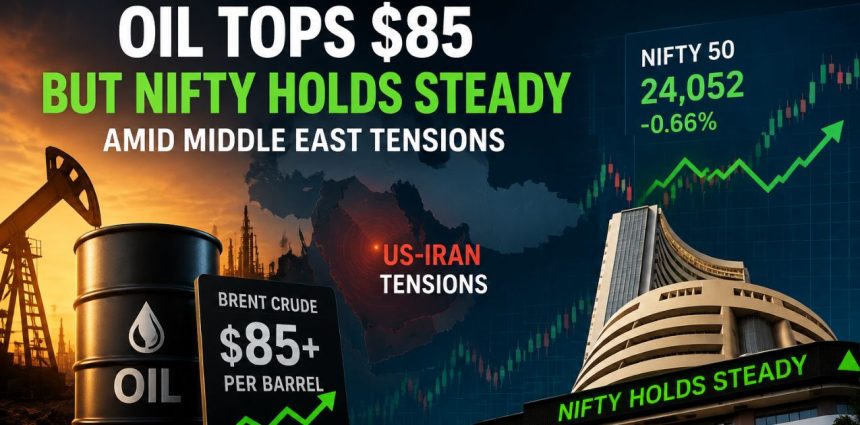
Mumbai: Oil prices climbed past $85 a barrel on Tuesday as fresh Middle East tensions rattled global markets, but the Nifty held up far better than the headlines suggested. The Nifty and Sensex slipped a modest 0.7%, with traders continuing to bet on US President Donald Trump’s now-familiar pattern of stepping back from full-blown escalation, a pattern Wall Street has taken to calling the “TACO trade,” short for “Trump Always Chickens Out.”
Nifty, Midcap, Smallcap: What the Numbers Show
On Tuesday, the Nifty Midcap 150 eased 0.5% and the Smallcap 250 fell 1%, broadly in line with the Nifty’s own decline. But the weekly picture tells a calmer story for the Nifty. Over the past week, the Nifty’s fall has been contained to around 1.4%, while both the Midcap and Smallcap indices are actually up 0.6% in the same period, suggesting the broader market has largely shrugged off the latest round of geopolitical stress.
Check Live: Nifty Midcap Today — Live Spot, Levels & Movers
Why Investors Are Not Pricing In a Full-Blown War
Fund managers say the muted reaction is deliberate, not complacent. S Naren, chief investment officer at ICICI Prudential AMC, said the market’s calm stems from investors not pricing in a full-scale Middle East war, adding that participants are also growing accustomed to intermittent flare-ups in the region. That recurring exposure, he suggested, has made the Nifty less reactive to each fresh headline than it once was.
TACO Trade Keeps Nifty Selling in Check
Nilesh Shah, managing director at Kotak Mutual Fund, offered a similar read on sentiment, noting that investors are expecting another round of TACO-style behaviour from Washington. Shah added that the Nifty’s outlook is tied more closely to crude oil prices than to the missile exchanges themselves, which in turn appear to be tracking the broader TACO trade narrative rather than genuine fears of a wider war.
Brent Crude Hits One-Month High on Iran Blockade
Crude benchmarks reflected the escalation more directly than equities did. Brent crude rose 3.8% to $86.5 a barrel, pushing past the $80 mark to touch a one-month high after the US moved to block Iran’s oil exports. Elevated crude is typically negative for India as a net oil importer, but investors have not rushed for the exits. Few market participants expect the Nifty to retest its March lows, and some strategists argue that investors who can look past near-term volatility could be rewarded over the next 12 months, following a two-year lean patch for the broader market.
Goldman Sachs Sees Nifty at 26,500 by June 2027
Goldman Sachs strategists flagged that the renewed Middle East tensions could stoke near-term volatility, but their base case remains constructive. The brokerage expects the Nifty to reach 26,500 by June 2027, implying around 10% upside from recent levels, underscoring a medium-term bullish stance on the Nifty despite the current bout of geopolitical noise.
FII Selling Streak May Be Nearing Its End
Adding to the sense of calm is growing optimism that foreign selling in Indian equities could be in its final stages. According to market data cited by ET, foreign institutional investors have net bought around Rs 11,605 crore of Indian stocks so far in July, a sharp reversal after offloading a combined Rs 2,71,915 crore over the preceding four months.
Goldman Sachs believes the worst of the foreign selling pressure is now behind the market, a view that is increasingly gaining traction among investors. Global funds are also said to be trimming crowded positions in other emerging markets such as Taiwan and South Korea, fuelling hopes that some of that capital could eventually rotate into Nifty stocks. For now, though, the market has yet to see clear evidence of a large-scale reallocation.
With crude prices elevated and geopolitical risk still simmering in the background, Nifty investors will be watching the next set of FII flow data and any fresh developments between the US and Iran for cues on where the market heads next.
KEY TAKEAWAYS
- Nifty and Sensex fell 0.7% on Tuesday as oil crossed $85/barrel on renewed Middle East tensions; weekly Nifty decline restricted to just 1.4%
- Brent crude jumped 3.8% to $86.5 a barrel, a one-month high, after the US blockade on Iran’s oil exports
- Fund managers at ICICI Prudential AMC and Kotak Mutual Fund say markets aren’t pricing in a full-blown war, with the TACO trade keeping panic selling in check
- Goldman Sachs sees the Nifty reaching 26,500 by June 2027, implying around 10% upside from recent levels
- FIIs turned net buyers in July (Rs 11,605 crore) after four straight months of selling worth Rs 2,71,915 crore, according to market data cited by ET
Read Next: TCS, Infosys, Wipro and Other IT Stocks Fall Up to 2.5% After IBM Crash
FAQ
Q1. Why did the Nifty fall despite fears of a full-blown Middle East war?
The Nifty’s fall was contained because fund managers say investors are not pricing in a full-scale war, and markets have grown more accustomed to intermittent geopolitical flare-ups in the region.
Q2. What is the TACO trade?
TACO stands for “Trump Always Chickens Out”, Wall Street shorthand for US President Donald Trump’s tendency to step back from escalating conflicts or policy threats, which investors are currently pricing into market behaviour.
Q3. What is Goldman Sachs’ Nifty target?
Goldman Sachs expects the Nifty to reach 26,500 by June 2027, implying around 10% upside from recent levels, even as it flags near-term volatility from Middle East tensions.
Q4. Have FIIs turned net buyers in Indian equities?
Yes. According to market data cited by ET, foreign institutional investors net bought Rs 11,605 crore of Indian stocks in July after selling a combined Rs 2,71,915 crore over the previous four months.
Q5. How high did Brent crude oil prices rise?
Brent crude rose 3.8% to $86.5 a barrel, its highest in a month, after the US moved to block Iran’s oil exports.
Track real-time FII and DII activity with NiftyTrader’s FII-DII Dashboard for the latest institutional flow data driving Nifty and Sensex moves.
DISCLAIMER:
This article is for informational and educational purposes only and should not be considered investment advice. Market conditions can change rapidly. Readers should conduct their own research or consult a SEBI-registered investment adviser before making financial decisions.