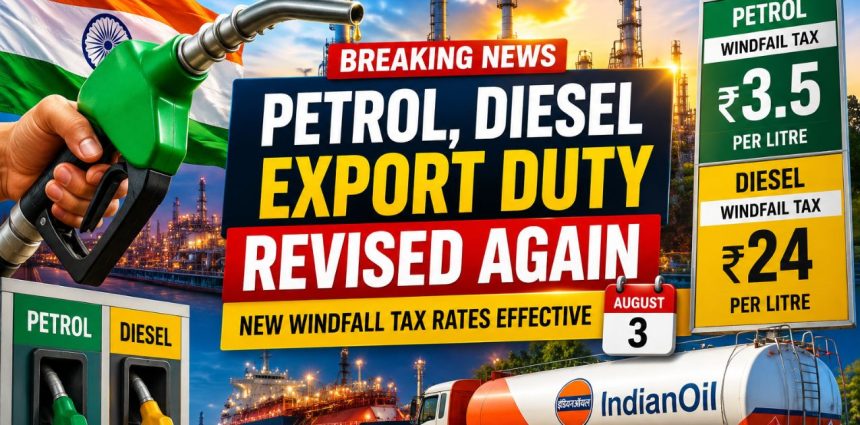
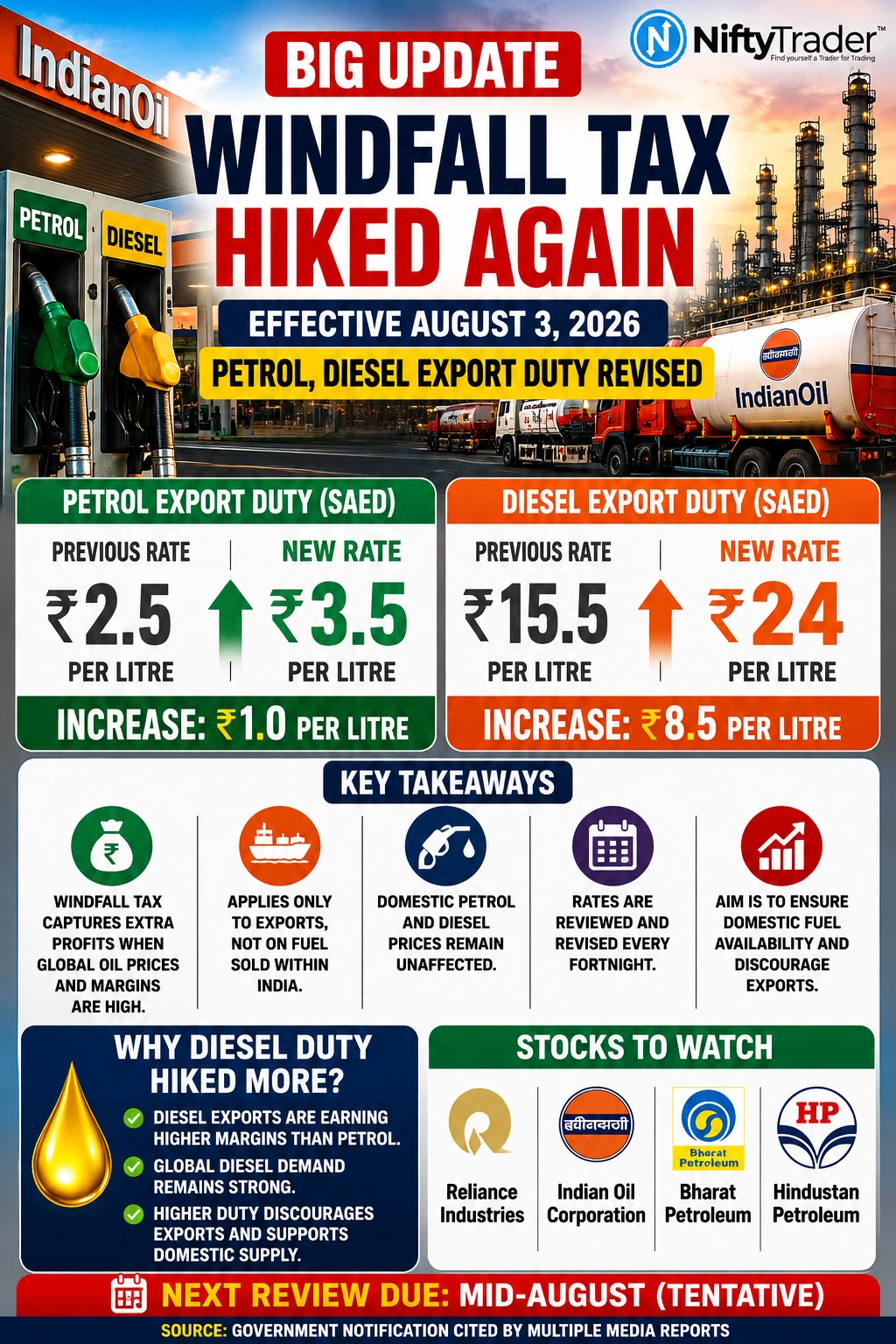
The Centre has raised the windfall tax on petrol and diesel exports with effect from August 3, 2026, according to a government notification cited by multiple media reports. The Special Additional Excise Duty (SAED) on petrol exports climbs to ₹3.5 per litre from ₹2.5 per litre, while the levy on diesel exports jumps sharply to ₹24 per litre from ₹15.5 per litre, a steep ₹8.5 per litre increase in a single fortnightly cycle.
Need to Know
- Petrol export duty (SAED) raised to ₹3.5/litre from ₹2.5/litre
- Diesel export duty (SAED) raised sharply to ₹24/litre from ₹15.5/litre, effective August 3
- Revision is part of the government’s fortnightly review of windfall tax rates
- Domestic retail prices of petrol and diesel remain unaffected, the export levy applies only to exports
- Diesel duty has been hiked far more steeply than petrol, reflecting wider export margins on diesel
- Rates have swung repeatedly since the export duty framework returned in March 2026
What Changed in the Latest Windfall Tax Review
The windfall tax, formally the Special Additional Excise Duty, applies only to petroleum products shipped out of India, not to fuel sold domestically. The Finance Ministry adjusts SAED rates roughly every 15 days, tracking movements in international crude oil prices, refining margins, and export-import price differentials.
The August 3 revision marks a sharp reversal from the previous fortnight: on July 16, the government had actually cut the petrol export levy to ₹2.5/litre from ₹4/litre while raising diesel duty to ₹15.5/litre from ₹8.5/litre. This time, both fuels have moved higher, with diesel absorbing the bigger jump.
Why Diesel Duty Was Raised More Than Petrol
The gap between the two hikes comes down to margins. Diesel exports have consistently fetched refiners a wider profit spread than petrol exports in recent weeks, as global diesel demand, particularly from Europe and other import-dependent markets, has stayed firm even as crude prices fluctuate. When refiners earn outsized margins on diesel shipped abroad, SAED is designed to claw back a share of that gain rather than let it flow entirely to exporters.
There’s also a supply-side angle. India’s own diesel consumption is significant, and a sharper SAED hike on diesel discourages refiners from prioritising export cargoes over the domestic market during a period of strong overseas demand. Petrol’s export economics, by contrast, have been comparatively softer this fortnight, which is why its SAED increase is far more modest at just ₹1/litre versus diesel’s ₹8.5/litre jump.
Why the Government Revises Windfall Tax So Often
Windfall taxes are designed to capture unusually high margins earned by refiners and exporters when global energy prices run hot, discouraging companies from diverting fuel abroad instead of meeting domestic demand. Since the current SAED framework kicked in from March 27, 2026, amid volatility linked to tensions in West Asia, rates have swung in both directions almost every fortnight, a sign that Brent crude and refining cracks remain unsettled.
Stocks to Watch
Reliance Industries: As India’s largest refiner with a sizeable export book through its Jamnagar SEZ unit, Reliance carries the most direct exposure to SAED changes. A higher diesel export levy is a variable worth tracking in the O2C segment’s margin commentary during Q1 FY27 earnings.
BPCL and HPCL: These state-run refiners sell the bulk of their output domestically, so their earnings sensitivity to the SAED hike is comparatively limited, though any export cargoes they do ship will now cost more in duty.
IOC: Similarly domestic-focused, with export volumes forming a small share of total sales, meaning the immediate margin hit from this SAED revision should stay contained.
What Investors Should Watch Next
The next SAED review is due around mid-August, and a few data points will shape it: movements in Brent crude prices, trends in Singapore refining margins (the regional benchmark for diesel and petrol cracks), export volume data from Indian refiners, and commentary on export mix during Reliance’s upcoming earnings call. A sustained rise in refining margins could keep SAED elevated in the next cycle; a cooling in crack spreads could bring another reversal, as seen between the July 16 and August 3 revisions.
Impact on Consumers and the Domestic Market
None of this changes pump prices for consumers, since retail fuel pricing in India is governed by a separate mechanism unrelated to the export duty. The windfall tax is squarely a cost borne by refiners and exporters on cargoes sent overseas, not by domestic buyers of petrol and diesel.
Bottom Line
The August 3 hike, ₹3.5/litre on petrol and a steep ₹24/litre on diesel, is the latest swing in a windfall tax regime that has now been revised repeatedly since March 2026, underlining how unsettled global crude and refining margins remain. Domestic consumers are unaffected; the impact falls on refiners and exporters, with Reliance Industries the most exposed given its scale of export-oriented refining capacity.
FAQs
What is the windfall tax on fuel exports?
It is a Special Additional Excise Duty (SAED) levied by the Indian government on petrol, diesel, and jet fuel shipped out of the country, aimed at capturing part of the excess profit refiners earn when export margins spike.
Does the windfall tax hike affect petrol and diesel prices in India?
No. The SAED applies only to fuel exported from India. Retail prices at the pump are set through a separate domestic pricing mechanism and are not directly linked to this export duty.
How often does the government revise windfall tax rates?
The Finance Ministry reviews and revises SAED rates roughly every fortnight, based on changes in international crude prices and refining margins.
This article is for informational purposes only and does not constitute investment advice. Please consult a SEBI-registered investment advisor before making any investment decisions.