CAS Trading Faces Its Biggest Test as MSCI India Rebalance Sparks $1.3 Billion Flood
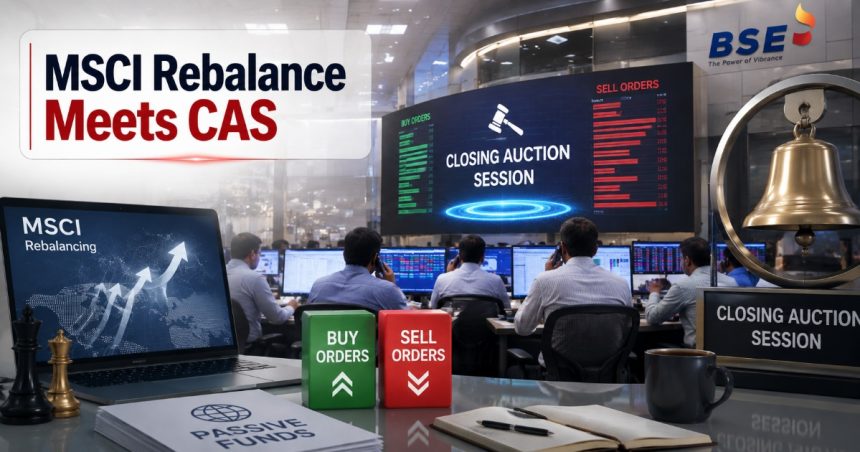
Indian equities are heading into a crucial session as the MSCI India index rebalancing takes effect on September 1. But this time, traders have another reason to watch the closing bell closely: the reshuffle will provide one of the first major tests of SEBI’s newly introduced Closing Auction Session (CAS).
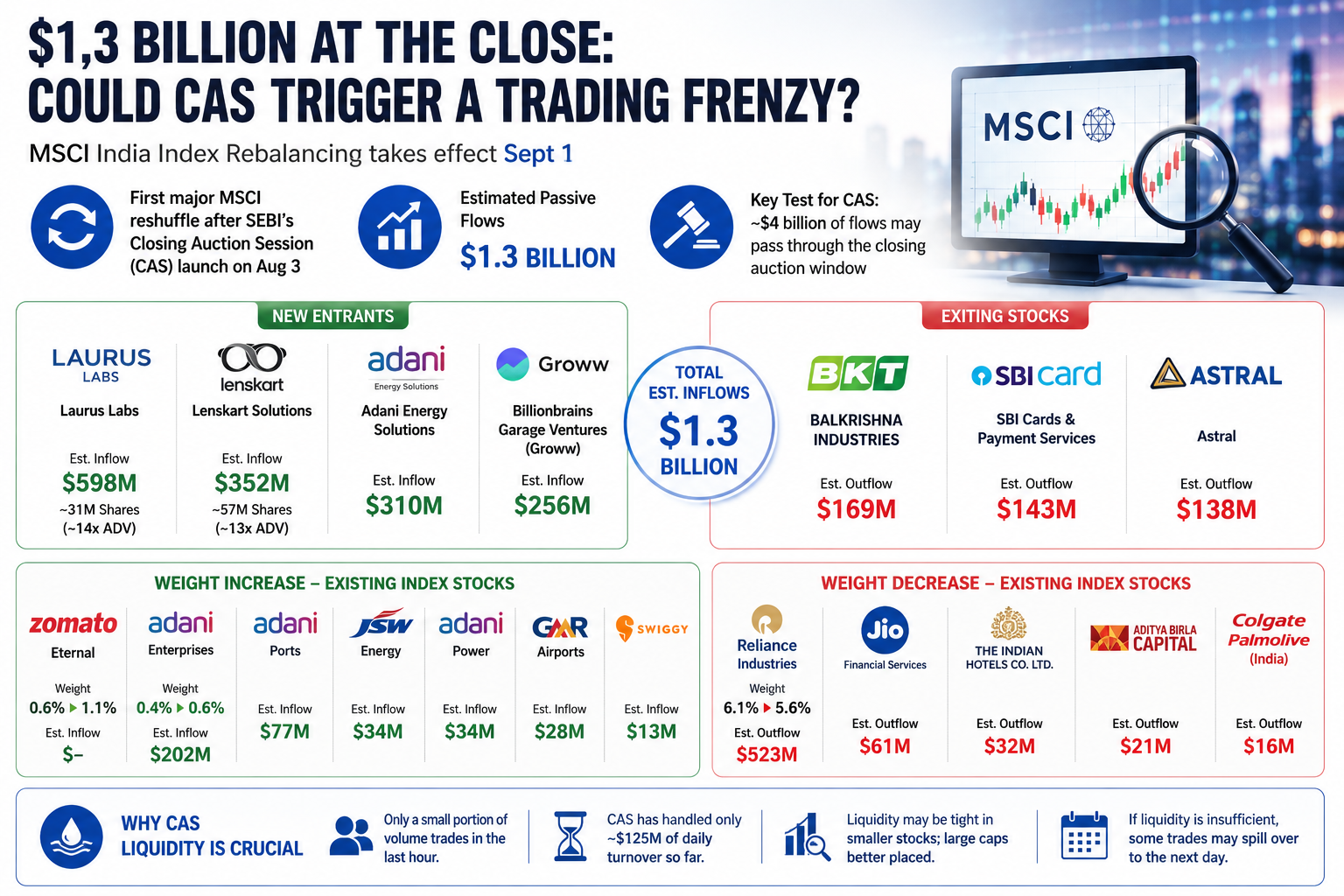
Around $1.3 billion in estimated passive flows could move across stocks affected by the MSCI India changes. With some individual orders expected to be many times their normal daily trading volumes, the final minutes of trading could become unusually important for investors.
Track Live : NSE Option Chain — Live
Laurus Labs could attract the biggest MSCI inflow
Among the stocks being added, Laurus Labs is expected to receive the largest passive buying interest.
According to estimates from Nuvama Alternative & Quantitative Research, the stock could attract approximately $598 million of inflows. That translates into around 31 million shares, or nearly 14 times its average daily trading volume.
The scale of the expected demand makes Laurus Labs one of the key stocks traders are watching around the MSCI India rebalancing.
Lenskart Solutions could also see substantial institutional demand. With an estimated MSCI weight of 0.3%, the stock could attract around $352 million of passive inflows, equivalent to approximately 57 million shares or 13 times its average daily trading volume.
Lenskart has already been in focus following stake sales by early investors including Alpha Wave Ventures, SoftBank, Temasek and ADIA, while BofA Securities, Edelweiss and NPS Trust have emerged as buyers.
Read More : Maruti Suzuki FY27-FY31: Sets Sights on 40 Lakh Capacity, 7 New SUVs and EV Push
Projected Major Inflows (Index Additions)
- Laurus Labs: Expected to be the largest absolute beneficiary with an estimated $598 million in passive inflows, representing roughly 14 times its average daily trading volume.
- Lenskart Solutions: Configured for a 0.3% index weight, attracting approximately $352 million in institutional buying (nearly 13 times its normal daily volume).
- Adani Energy Solutions & Groww (Billionbrains Garage Ventures): Rounding out the four key newcomers entering the global standard index.
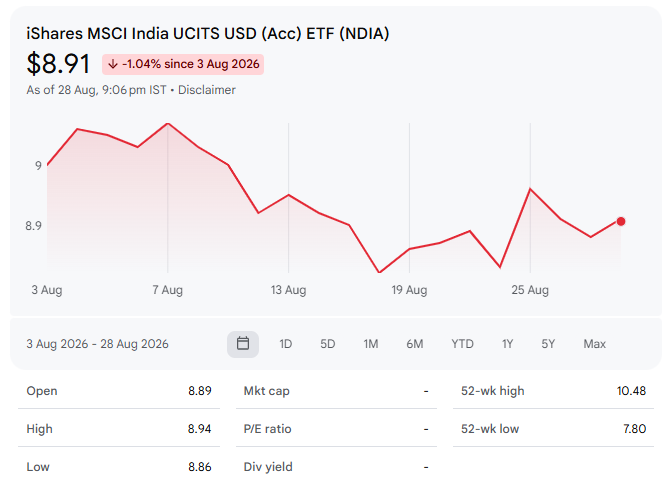
Why the new CAS could become the biggest market test
The size of the MSCI India flows is making liquidity the central concern.
Bloomberg estimates that the MSCI rebalance could generate around $5 billion in trading turnover from global passive funds, with roughly $4 billion potentially passing through the Closing Auction Session.
That would be almost 30 times the approximately $125 million in daily turnover the auction has typically handled so far.
The concern is straightforward: can the new CAS absorb a sudden wave of institutional orders without causing sharp price movements?
Motilal Oswal’s Chandan Taparia highlighted the liquidity issue, saying, “The key question is whether CAS will have enough liquidity to absorb the MSCI-related flows and match the entire volume.”
- Continuous trading for eligible stocks cuts off early at 3:15 PM.
- A dedicated 20-minute order collection and matching auction runs until 3:35 PM to discover a single equilibrium closing price.
- While the mechanism is designed to handle large institutional block orders smoothly, it has already caused sharp intraday swings during recent derivatives expiries due to restricted liquidity and technical unfamiliarity among some participants.
Adani stocks and Groww parent could see strong demand
Adani Energy Solutions is expected to attract roughly $310 million in passive inflows following its addition to the MSCI India Standard Index.
Billionbrains Garage Ventures, the parent company of Groww, could receive an estimated $256 million of inflows. Its shares recently attracted attention after a block transaction involving 2.1% of the company’s equity on August 26, with Ribbit Capital selling part of its stake.
Among existing MSCI constituents, Eternal is expected to see its index weight increase from 0.6% to 1.1%.
Adani Enterprises could see its weight rise from 0.4% to 0.6%, potentially bringing around $202 million of passive inflows. Adani Ports, JSW Energy, Adani Power, GMR Airports and Swiggy could receive estimated inflows of $77 million, $34 million, $28 million, $22 million and $13 million, respectively.
Reliance and other stocks face passive selling pressure
The MSCI India rebalancing will not only create buyers. Several stocks are expected to face significant passive outflows.
Reliance Industries could see its MSCI weight decline from 6.1% to 5.6%, potentially resulting in approximately $523 million of passive selling.
Other expected outflows include around $61 million from Jio Financial Services, $32 million from Indian Hotels, $21 million from Aditya Birla Capital and $16 million from Colgate-Palmolive India.
Stocks being removed from the MSCI India Standard Index could face additional selling. Estimated outflows stand at approximately $169 million for Balkrishna Industries, $143 million for SBI Cards and Payment Services and $138 million for Astral.
Track Live : BSE Option Chain — Live Sensex & Bankex Options Data Today
Here’s what happened today and why traders reacted
Stocks facing major MSCI-related inflows and outflows traded mixed on Monday as traders assessed the potential impact of the index reshuffle.
Laurus Labs, Lenskart Solutions, Adani Energy Solutions and Billionbrains Garage Ventures, the parent of Groww, are set to enter the MSCI India Standard Index. Meanwhile, Balkrishna Industries, SBI Cards and Payment Services and Astral are scheduled to be removed.
The MSCI India rebalancing becomes effective from September 1, meaning passive funds tracking the index need to adjust their positions.
That is where the potential trading frenzy comes in. A large portion of these transactions could be concentrated around the market close, putting the new CAS mechanism under pressure.
Traders should watch the closing prices closely
The impact may be particularly strong in stocks with smaller order books and lower regular trading volumes.
Larger index constituents such as Reliance Industries could be better positioned to absorb sizeable institutional transactions, but smaller stocks could experience greater price volatility if buy or sell orders overwhelm available liquidity.
Passive funds may also have to adjust their execution strategy if the CAS does not provide sufficient liquidity.
As Taparia noted, “If they don’t get sufficient liquidity, some of the trades will obviously have to be taken up the next day.”
For traders, this means the closing price may not tell the entire story. Sharp moves around the auction could reflect index-related flows rather than a fundamental change in the company’s business outlook.
Key Scale of the Event
- Expected Turnover: Global passive funds are set to generate about $4 billion to $5 billion in trading turnover.
- CAS Volume: Roughly $4 billion of these trades will pass through the CAS window.
- Normal vs. Heavy: This expected flow is nearly 30 times larger than the daily average of $125 million typically handled by the auction.
Index Changes
- Entering the Index: Laurus Labs, Lenskart Solutions, Adani Energy Solutions, and Billionbrains Garage Ventures (Groww’s parent company) are joining the MSCI India Standard Index.
- Leaving the Index: Balkrishna Industries, SBI Cards and Payment Services, and Astral are being removed.
Why It Matters
- New Rule: The Securities and Exchange Board of India (SEBI) launched CAS on August 3 to set a single official closing price at 3:30 PM.
- Market Risk: Recent sessions saw sharp price moves and low liquidity. This massive rebalancing will show if the new system can handle heavy institutional orders smoothly.