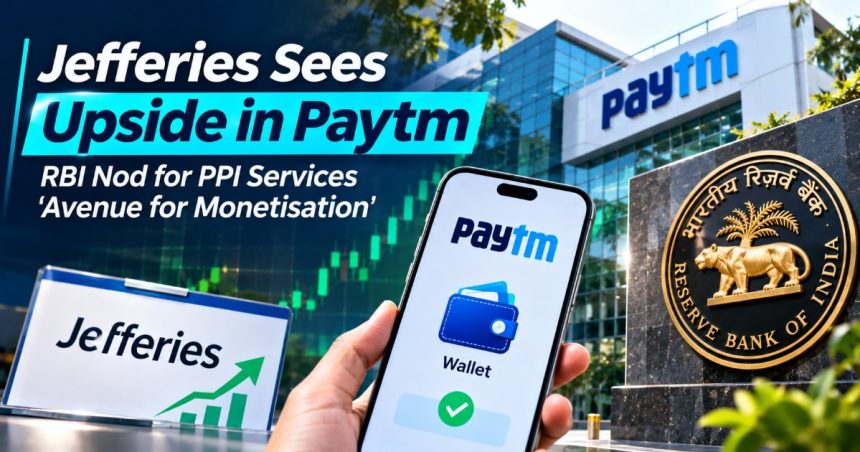
Paytm Shares Fall 2.5% as Investors Book Profits Despite Jefferies’ Bullish Target
Paytm shares witnessed selling pressure on Monday, November 16, as investors booked profits after the stock’s recent rally. However, the decline came alongside a positive development from global brokerage Jefferies, which raised its target price on One97 Communications, the parent company of Paytm, to Rs 2,300 from Rs 2,150.
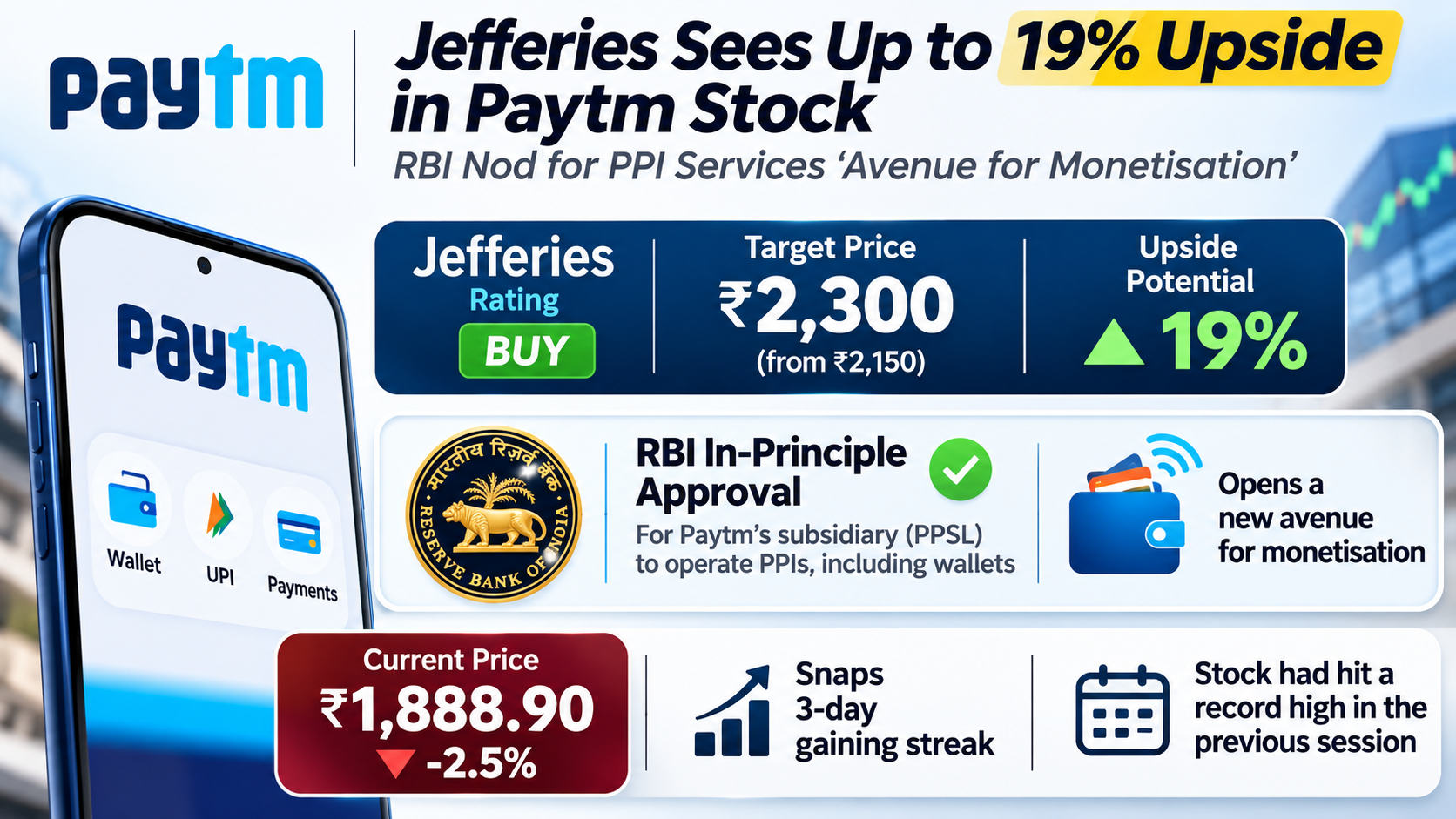
The brokerage maintained its ‘Buy’ recommendation, indicating an upside potential of around 19% from the previous session’s closing price.
The key development behind Jefferies’ optimism is the Reserve Bank of India’s (RBI) in-principle approval allowing Paytm Payments Services Ltd (PPSL) to operate prepaid payment instruments (PPIs), including digital wallets.
But despite this regulatory progress, Paytm shares declined 2.5% to Rs 1,888.90 on the NSE, snapping their three-session gaining streak. This raises an important question for investors: Is the recent decline an opportunity to watch the stock, or does the market need more evidence of sustained business growth?
Track Live : NSE Option Chain — Live | BSE Option Chain — Live Sensex & Bankex Options Data Today
Paytm Shares Fall : Why Jefferies Raised Paytm’s Share Price Target to Rs 2,300
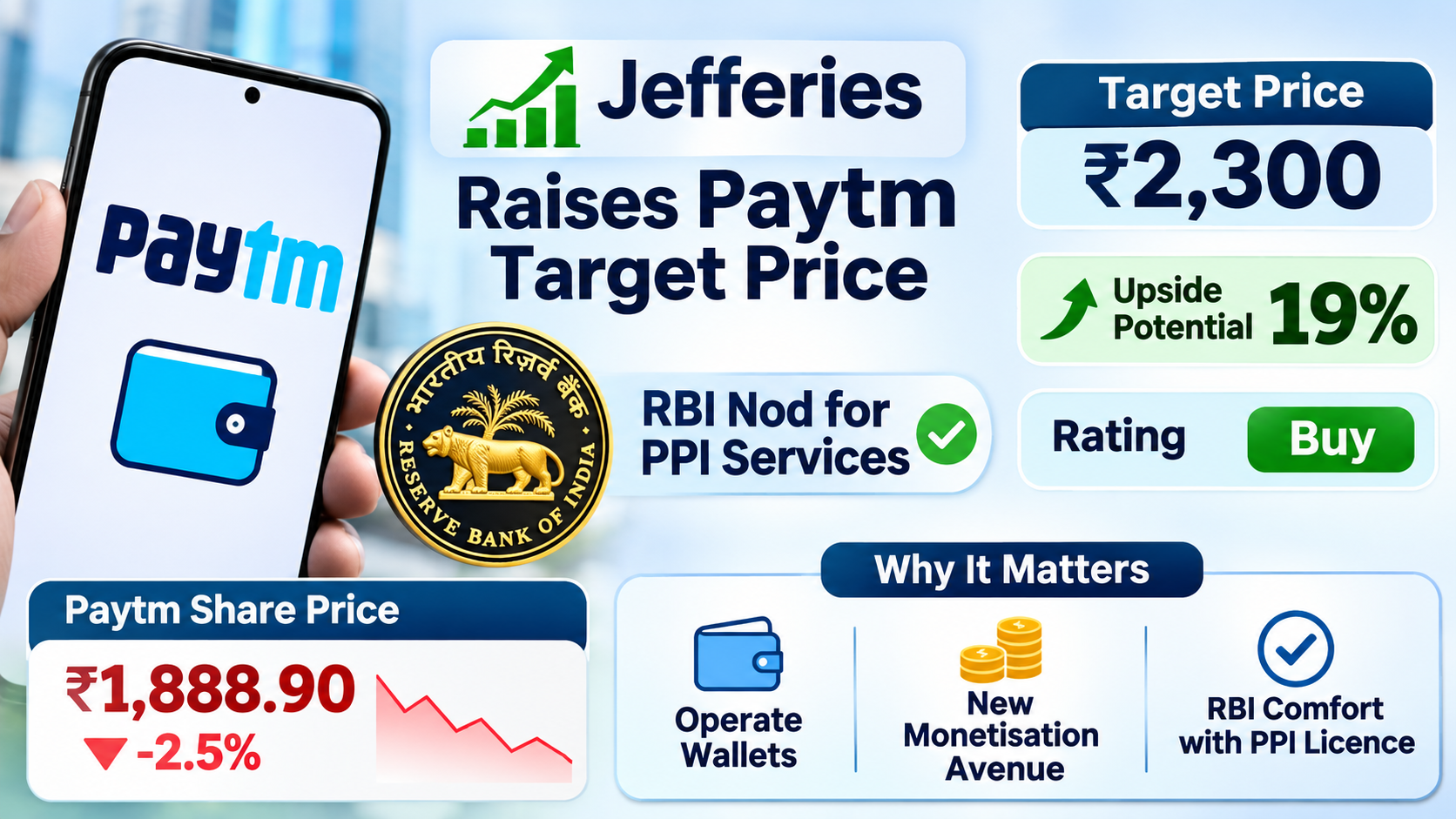
Jefferies raised its Paytm share price target to Rs 2,300 from Rs 2,150 while maintaining its ‘Buy’ rating.
The brokerage considers the RBI’s in-principle approval a positive development because it indicates the regulator’s comfort with reissuing a PPI authorisation to Paytm.
According to Jefferies, the approval provides another “avenue for monetisation”, potentially creating additional opportunities for the company to strengthen its payments business.
The development is particularly significant considering the regulatory challenges Paytm faced in 2024.
Jefferies Raises Paytm Target Price to ₹2,300
| Particulars | Details |
|---|---|
| Brokerage | Jefferies |
| Stock | One97 Communications |
| Previous target | ₹2,150 |
| Revised target | ₹2,300 |
| Rating | Buy |
| Implied upside | Approximately 19% |
| NSE price during Monday’s trade | Around ₹1,889 |
The revised target represents an increase of ₹150, or approximately 7% over Jefferies’ previous target price.
The 19% upside calculation is based on the previous trading session’s closing price, not necessarily Monday’s intraday price.
This distinction matters because Paytm shares experienced profit booking on Monday, falling approximately 2.5% and ending a three-session gaining streak.
How RBI’s PPI Approval Could Strengthen Paytm’s Business
The RBI had withdrawn Paytm’s PPI licence in January 2024, citing concerns involving compliance, systems and controls, and supervisory issues.
The latest in-principle approval marks an important step forward for PPSL.
Prepaid payment instruments, including digital wallets, allow customers to store money electronically and use it for payments.
The renewed authorisation could help Paytm expand its wallet-related services and explore additional monetisation opportunities, subject to the RBI’s final requirements and applicable conditions.
For investors, the development is important because regulatory progress could support Paytm’s long-term payments business strategy.
If PPSL receives final authorisation and successfully launches its wallet services, Paytm could potentially benefit from:
-
Customer engagement: Wallet services can encourage customers to use the Paytm application more frequently.
-
Merchant payments: Wallets can complement the company’s existing merchant payment infrastructure.
-
Cross-selling opportunities: The company could offer additional eligible financial and payment services to its existing customers.
-
Payment ecosystem expansion: Wallets can strengthen Paytm’s broader payments-led business model.
-
New monetisation opportunities: Wallet-related services could create additional revenue streams, depending on transaction volumes and commercial arrangements.
However, these are potential business opportunities rather than confirmed incremental revenues.
Jefferies’ interpretation is that the RBI’s decision represents a positive regulatory development and provides another potential monetisation avenue.
Track Live : Nifty Levels Today | Sensex Levels Today
What Paytm’s Latest Development Means for Traders and Investors
Jefferies’ revised target price provides a positive signal for Paytm investors. However, the stock’s Monday decline highlights the difference between brokerage optimism and actual market performance.
Investors should monitor the following factors:
- Regulatory developments: Progress towards final PPI authorisation and operational commencement.
- Revenue growth: Whether wallet services contribute meaningfully to future revenue.
- Profitability: Paytm’s ability to improve earnings while expanding its payments business.
- Market sentiment: Whether the stock can sustain its recent gains after profit booking.
Read More : India’s Sports Industry Is Growing 12-14% a Year, and KPMG Is Building AI Tools for It
What Are Prepaid Payment Instruments (PPIs)?
Prepaid Payment Instruments are digital payment instruments that allow users to store monetary value and use it for purchases, services and other permitted financial transactions.
Digital wallets are among the most familiar examples.
The RBI broadly classifies PPIs into two categories:
| Category | Features |
|---|---|
| Small PPIs | Issued after obtaining minimum customer details; restricted to eligible purchases of goods and services |
| Full-KYC PPIs | Issued after completing KYC; can support purchases, permitted fund transfers and cash withdrawals |
Full-KYC wallets also have interoperability requirements, allowing eligible wallets to connect with other payment systems through UPI.
This is important because wallet services can complement Paytm’s existing QR-code payments, merchant network and consumer application.
Why Did the RBI Previously Restrict Paytm Payments Bank?
To understand the importance of the latest approval, investors need to understand the regulatory history.
The RBI imposed restrictions on Paytm Payments Bank Limited (PPBL) in January 2024 after its system audit and compliance validation revealed persistent non-compliances and material supervisory concerns.
The restrictions were announced on January 31, 2024.
Key developments included:
-
March 2022: RBI directed Paytm Payments Bank to stop onboarding new customers.
-
January 31, 2024: RBI announced restrictions on accepting fresh deposits, credits and wallet top-ups after February 29, 2024.
-
February 16, 2024: The deadline was extended to March 15, 2024.
-
February 23, 2024: RBI announced additional steps to facilitate migration of affected UPI handles to other banks.
-
November 13, 2026: RBI granted PPSL in-principle authorisation to issue PPIs, including wallets.
The distinction between the two companies is particularly important:
-
PPBL: Paytm Payments Bank, which faced the earlier banking restrictions.
-
PPSL: Paytm Payments Services, a wholly owned subsidiary of One97 Communications, which has now received the new in-principle PPI authorisation.
The new approval is therefore a separate regulatory development and should not be interpreted as the RBI restoring the old Paytm Payments Bank licence.
Why Paytm Shares Fell Despite the Positive Brokerage Upgrade
Despite Jefferies raising its target price, Paytm shares declined approximately 2.5% during Monday’s trading session.
This reflects an important difference between brokerage expectations and short-term market behaviour.
There are several possible factors:
Profit booking after a strong rally: Paytm had gained significantly following the RBI announcement, and some investors may have chosen to lock in profits.
Positive news already priced in: The RBI approval was announced on November 13, and the stock had already reacted positively. Investors may have factored in part of the good news before Monday’s session.
Gap between approval and revenue: The latest authorisation is only in-principle. The company must still satisfy the audit and final approval requirements before issuing new wallets.
Valuation considerations: Strong financial growth and positive regulatory developments do not automatically mean that the stock is attractively valued at every market price.
These are possible explanations, not confirmed reasons for the day’s decline.
Can Paytm Shares Sustain Their Rally in Coming Sessions?
Paytm remains in focus following the RBI’s regulatory approval and Jefferies’ bullish revision of its target price.
The Rs 2,300 target highlights the brokerage’s confidence in the company’s potential, but investors should not interpret it as a guaranteed share price level.
The coming sessions will be important in determining whether Paytm can regain upward momentum. Traders should watch buying interest, trading volumes and further regulatory updates before making investment decisions.