Need to Know
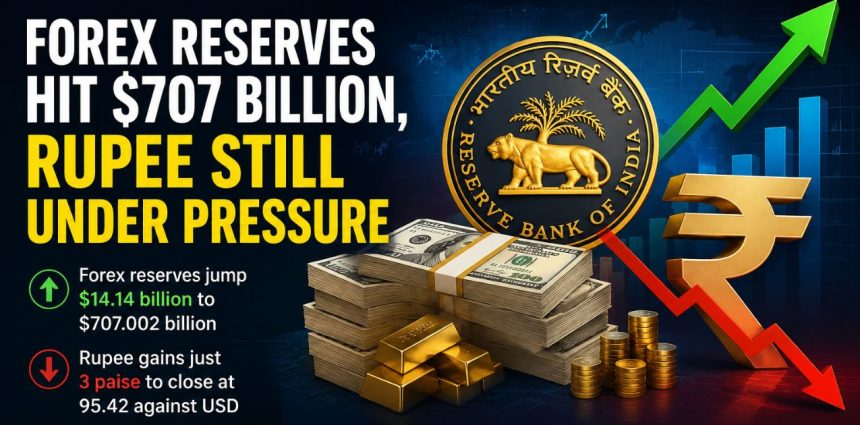
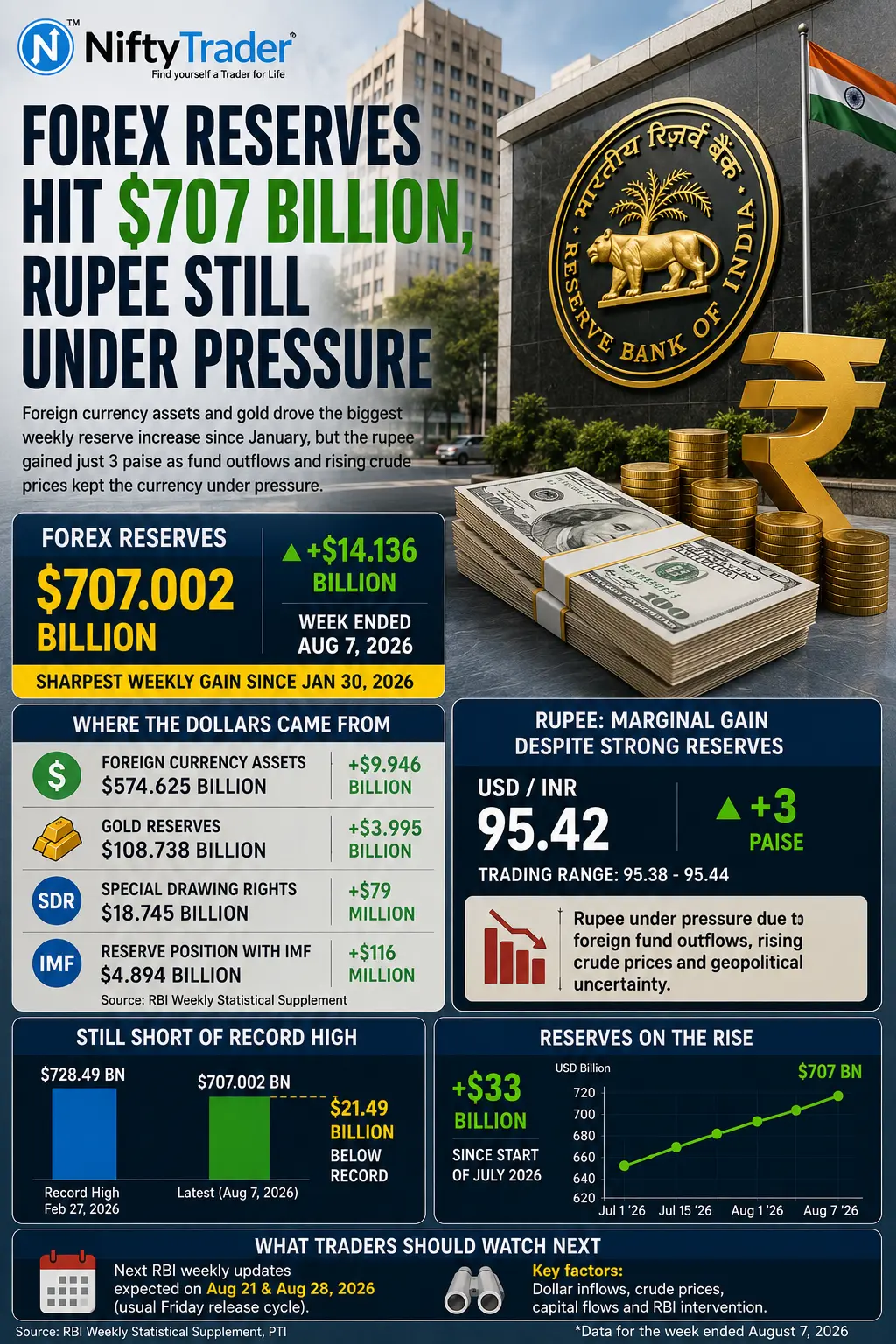
- India’s forex reserves rose $14.136 billion to $707.002 billion for the week ended August 7, 2026, the sharpest weekly gain since the week ended January 30, per RBI data.
- Foreign currency assets, the largest component, added $9.946 billion to $574.625 billion; gold reserves rose $3.995 billion to $108.738 billion.
- The rupee closed at 95.42 against the US dollar on Friday, up just 3 paise, as fund outflows and elevated crude prices kept the currency under pressure, per forex traders cited by PTI.
- Reserves remain $21.49 billion below the record $728.49 billion touched in the week ended February 27, 2026.
- Reserves have climbed roughly $33 billion since the start of July, RBI data shows, as the RBI resumed dollar purchases amid sustained inflows.
Mumbai, August 14, 2026: India’s forex reserves rose by $14.136 billion in the week ended August 7, taking the total to $707.002 billion, according to data released by the Reserve Bank of India on Friday. It was the sharpest single-week gain since the week ended January 30 and pushed reserves to their highest level since mid-March.
In rupee terms, the reserves increased by Rs 1,19,945 crore to Rs 67.32 lakh crore for the week, RBI data showed.
$14.1 Billion Reserve Jump: Where the Dollars Came From
Foreign currency assets rose $9.946 billion to $574.625 billion, the single biggest contributor to this week’s $14.136 billion forex reserves increase. Gold reserves added $3.995 billion to touch $108.738 billion. Special drawing rights (SDRs) rose $79 million to $18.745 billion, and India’s reserve position with the IMF increased $116 million to $4.894 billion.
RBI data does not break down exactly how much of this week’s increase came from direct dollar purchases versus valuation gains in gold and other reserve assets. But the broader trend is clear: after months of selling dollars to defend the rupee, the RBI has resumed dollar purchases amid sustained foreign-exchange inflows, helping rebuild the buffer since July.
₹95.42 Rupee: Why Reserves Aren’t Enough
$707 billion in reserves sounds like a strong hand. A rupee that closed at just 95.42 — up a mere 3 paise — suggests the currency market isn’t fully buying it.
The Indian rupee appreciated 3 paise to close at 95.42 (provisional) against the US dollar on Friday. At the interbank forex market, the currency opened at 95.39 and moved in a range of 95.38 to 95.44 through the session.
That’s a marginal move for a week that delivered the biggest reserve jump since January. Forex traders cited by PTI said the rupee stayed under pressure through the session on foreign fund outflows and rising crude oil prices amid ongoing geopolitical uncertainty, a reminder that a fatter reserve cushion hasn’t fully insulated the currency from external pressure this week.
Retail and NRI investors tracking both currency and equity flows can cross-check the latest institutional activity on NiftyTrader’s FII-DII Tracker (niftytrader.in/fii-dii-data), updated daily.
NiftyTrader Desk View
| Metric | Key Data Point | Market Read |
|---|---|---|
| Forex Reserves | $707.002 bn (+$14.136 bn WoW) | Best single-week gain since Jan 30, 2026; highest since mid-March |
| Foreign Currency Assets | $574.625 bn (+$9.946 bn WoW) | Largest contributor to this week’s increase |
| Gold Reserves | $108.738 bn (+$3.995 bn WoW) | Second-largest contributor; gold prices layered on fresh accretion |
| Rupee (USD/INR) | Closed at 95.42, +3 paise | Marginal gain despite record inflow; outflows and crude cap upside |
Source: RBI Weekly Statistical Supplement; PTI
Can Forex Reserves Reclaim the $728.49 Billion Record?
Even with this week’s jump, reserves remain $21.49 billion below the all-time high of $728.49 billion recorded in the week ended February 27, 2026. That peak was followed by a decline as the RBI sold dollars intermittently to cap excessive rupee volatility.
Overall reserves are now $15.894 billion higher than the end of March 2026 and $13.384 billion above year-ago levels. Whether the RBI can close the remaining $21.49 billion gap to February’s record depends on whether fresh dollar inflows keep outpacing demand from outflows, crude-linked pressure and the RBI’s own periodic interventions to smooth rupee volatility.
What Traders Should Watch Next
The reserve rebuild is real. The rupee’s muted response to it is the more important signal. With reserves still $21.49 billion below February’s record, the next test is whether fresh inflows can keep rebuilding the buffer without renewed pressure from crude, capital outflows and currency volatility.
RBI’s next two weekly updates, expected around August 21 and August 28, going by its usual Friday release cycle, will show whether this week’s build-up was the start of a trend or a one-off spike.
Read Next: Trump’s 100% Drone Tariff: 4 Indian Stocks to Watch as US Supply Chain Shifts
FAQs
Q1. What is India’s forex reserves level as of August 7, 2026?
India’s forex reserves stood at $707.002 billion for the week ended August 7, 2026, up $14.136 billion from the previous week, according to RBI data.
Q2. Why did forex reserves rise sharply this week?
Foreign currency assets rose $9.946 billion and gold reserves rose $3.995 billion, together driving the week’s $14.136 billion increase — the sharpest weekly gain since the week ended January 30, 2026.
Q3. What is the rupee’s exchange rate against the US dollar today?
The rupee closed at 95.42 against the US dollar on Friday, up 3 paise, after trading in a range of 95.38 to 95.44 during the session.
Q4. How far are India’s forex reserves from their all-time high?
Reserves remain $21.49 billion below the record $728.49 billion touched in the week ended February 27, 2026.
Q5. How much have reserves grown since July 2026?
Reserves have climbed by around $33 billion since the start of July 2026, RBI data shows, as the RBI resumed dollar purchases amid sustained foreign-exchange inflows.
Disclaimer: This article is for informational purposes only and does not constitute investment advice. NiftyTrader does not recommend buying, selling or holding any security based on the information provided. Readers are advised to consult a registered financial advisor and refer to SEBI guidelines before making any investment decisions.