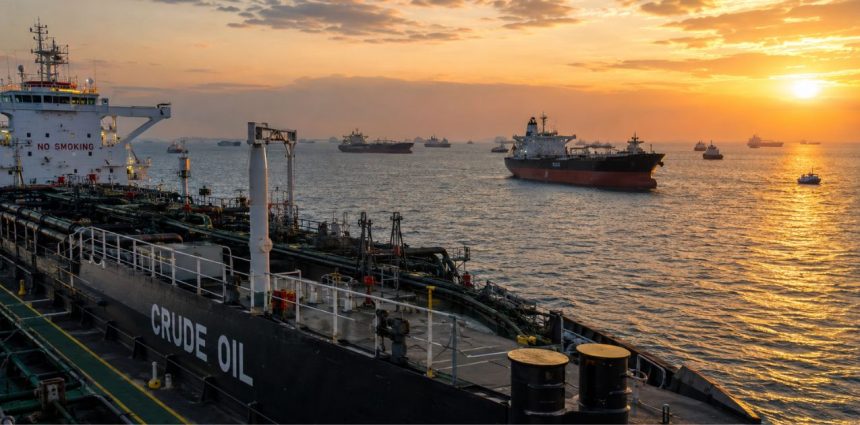
Brent has cooled from its April wartime peak of $126 to around $80, but the postponement of US-Iran nuclear talks in Switzerland on June 19 is a reminder this relief rally rests on a fragile, freshly-signed deal. For import-heavy India, cheaper crude is still a clear tailwind.
Key Takeaways
- Brent crude is trading near $79–80/barrel (June 19–20), down sharply from an April wartime peak of $126 (intraday) as the US-Iran war de-escalates. MCX crude settled at ₹7,257/barrel on June 19.
- The US and Iran signed a 14-point interim MoU in mid-June, reopening the Strait of Hormuz, easing sanctions, and opening a 60-day nuclear-talks window. But follow-up technical talks in Switzerland on June 19 were postponed amid ongoing Israel-Hezbollah fighting in Lebanon.
- For India, which imports more than 85% of its crude, cheaper oil shrinks the import bill, supports the rupee, and cools inflation, giving the RBI more room on rates.
- The market read-through splits by sector: OMCs, paints, aviation, and tyres typically gain when crude falls, while upstream producers (ONGC, Oil India) lag. When the first ceasefire hit on April 8, the Nifty jumped 3.64%.
- Goldman Sachs has cut its Q4 Brent forecast to $80 and sees Gulf exports normalising by end-July, raising the risk of a supply glut, amplified by the UAE’s exit from OPEC.
Oil cools from wartime highs, but the deal is only days old
Brent crude, which surged to an intraday wartime high of $126 a barrel on April 30, 2026, before closing at $114.01, has now retreated to around $79–80.
That unwinds much of a run-up that had seen the benchmark climb roughly 60% from the start of the US-Israel-Iran war on February 28. Domestically, MCX crude oil settled at ₹7,257/barrel on June 19, well off the highs reached when the Strait of Hormuz was effectively shut.
The trigger for the slide is a genuine de-escalation. In mid-June, the US and Iran signed a 14-point interim memorandum of understanding, inked by President Trump at the Palace of Versailles on June 17, that pauses fighting, reopens the Strait of Hormuz, lifts the US blockade, and lets Tehran resume oil sales.’
It also starts a 60-day clock for talks on Iran’s nuclear programme. But the relief rally hit a snag almost immediately.
Why the postponed Switzerland talks matter
Technical talks scheduled for Friday, June 19, at Bürgenstock, Switzerland, meant to begin implementing the deal and the wider nuclear negotiations, were postponed at short notice.
The Swiss Foreign Ministry confirmed the delay but gave no reason or new date, adding that Bern remains ready to host. US Vice President JD Vance, who was set to lead the American delegation, scrapped his trip.
Reporting tied the slip to the fighting in Lebanon: with Israeli strikes on Hezbollah continuing, Iran is understood to have held back its delegation.
Later Friday, Israel and Hezbollah agreed to a separate ceasefire that took effect at 4 p.m. local time, which steadied sentiment somewhat, but it does not resolve the core nuclear-talks impasse.
The takeaway for traders: the MoU is signed and the ceasefire is holding, but the follow-up diplomacy is days old and clearly fragile.
📊 Track the move on NiftyTrader: See how this risk-on/risk-off swing is showing up in institutional positioning with today’s FII-DII Activity.
Strait of Hormuz: moving again, not yet normal
The strait, which carries close to a fifth of the world’s oil, is reopening in phases rather than all at once. On June 18, around 10 million barrels of crude were seen moving through or waiting near the chokepoint, including the first Saudi-owned tankers since the war began more than three months earlier.
By the next morning, though, the flow had thinned again, with no outbound vessels leaving the Persian Gulf. Iran has also floated mandatory insurance for vessels using the route, free for now but a potential cost later. In short, confidence is returning, but cautiously.
Crude & rupee snapshot
| Indicator | Level now | Context |
|---|---|---|
| Brent crude | ~$79–80/bbl | Down from an April wartime peak of $126 (intraday, 30 Apr); ~8% weekly fall |
| WTI crude | ~$76–77/bbl | Tracking Brent lower |
| MCX crude | ~₹7,280–7,290/bbl visible level | Reflects cheaper dollar crude + a firmer rupee |
| USD/INR | ~94.3 | Recovered ~130 paise in 3 sessions; record low was 96.8 on 20 May |
| India VIX | ~13 | 3-month low as the oil shock fades |
Data as of 20 June 2026. Live levels move intraday, refresh before publishing.
What cheaper crude means for India
For an import-heavy economy, lower oil is unambiguously good news. India buys more than 85% of its crude from abroad, so every dollar off the price flows straight into a smaller import bill, a narrower current account deficit and less pressure on the rupee.
The currency has already responded. The rupee has recovered roughly 130 paise in three sessions to around 94.3 per dollar, pulling back from a record low of 96.8 hit on May 20.
Softer crude also cools imported inflation, giving the RBI more headroom on rates. And nerves have eased: India VIX has dropped to around 13, a three-month low, as the oil shock fades.
Check Live: India VIX Live – Today’s Level, Chart & History
The sector read: who wins, who lags
This is where the move gets interesting for equity traders. A crude crash does not lift all boats; it splits the market by where a company sits in the oil value chain.
When the first ceasefire news broke on April 8 and Brent fell about 15% in a session, the Nifty jumped 3.64% that day, OMC and aviation stocks rallied 6–10%, and upstream producers fell.
How crude-sensitive sectors typically react when oil falls
| Sector | Why crude matters | Stocks that often move | Typical reaction to falling crude |
|---|---|---|---|
| Oil Marketing (OMCs) | Crude is the core input; marketing margins improve | BPCL, HPCL, IOC | Positive, but capped by excise/price-cut risk and inventory losses |
| Paints | Solvents and resins are crude derivatives | Asian Paints, Berger Paints, Kansai Nerolac | Positive — input costs ease |
| Aviation | ATF is ~40–45% of operating cost | InterGlobe (IndiGo), SpiceJet | Positive — fuel bill falls |
| Tyres | Synthetic rubber, carbon black are oil-linked | MRF, Apollo Tyres, CEAT, JK Tyre, Balkrishna | Positive — raw-material relief |
| Upstream / Producers | Lower crude means lower realisations | ONGC, Oil India | Negative—earnings squeezed |
Typical, historical reactions shown for context only, not a recommendation to buy or sell any stock. Always do your own research.
A caveat on OMCs: while lower crude lifts marketing margins, the gains are often capped by excise-duty hikes, government-mandated fuel-price cuts, or near-term inventory losses, so the read-through is rarely as clean as the headline suggests.
📊 Read positioning live: Check where traders are building Nifty positions on the Nifty Option Chain.
The glut risk on the other side
Beyond the ceasefire, the bigger swing factor is supply. Goldman Sachs has cut its Q4 2026 Brent forecast to $80 from $90 and brought forward its assumption for Gulf exports returning to pre-war levels to end-July, a month earlier than before.
If Hormuz fully reopens and the barrels taken offline during the war flood back alongside steady OPEC+ output, the market could swing from shortage to oversupply.
The UAE’s exit from OPEC (effective May 1) adds to that risk by loosening coordinated supply discipline. The catch: Goldman flags the outlook as two-sided; its bull case still sees Brent above $130 if Hormuz disruptions drag on.
Three scenarios for crude, and the India read-through
| Scenario | What triggers it | Brent zone | India’s impact |
|---|---|---|---|
| Faster normalisation (Goldman base case) | Gulf exports back to pre-war by end of July | ~$80/bbl (Q4) | Smaller import bill, firmer rupee, cooler CPI, tailwind for oil-sensitive stocks |
| Partial / intermittent reopening | Hormuz reopens in fits through Q3 | ~$90–100/bbl | Modest relief; the rupee is range-bound ~93–96 |
| Re-escalation (Goldman bull case) | Talks collapse, fresh strikes, Hormuz disruption persists | $130/bbl+ | Import bill jumps, rupee pressure, inflation and CAD risk |
Bottom line
Oil has corrected hard from April’s wartime spike, and for import-heavy India, that is a real tailwind: cheaper crude, a firmer rupee, cooler inflation, and margin relief across oil-sensitive sectors.
But the interim deal is only days old, and Friday’s postponement of the Switzerland talks is a reminder that the diplomacy can slip just as fast as prices fell.
Expect crude, the rupee, Nifty, and oil-linked stocks that move with it to stay headline-sensitive in the weeks ahead.
Check here: Crude Oil Option Chain Live – MCX OI & Max Pain
Disclaimer: This article is for informational purposes only and does not constitute investment advice. Please consult a registered financial advisor before making any investment decisions. NiftyTrader does not guarantee returns on any security.