Flying IndiGo Soon? IndiGo fare hike puts airline costs back in focus
For air travellers, the next flight could cost more. For investors, the bigger question is whether rising fuel costs will start putting pressure on airline margins.
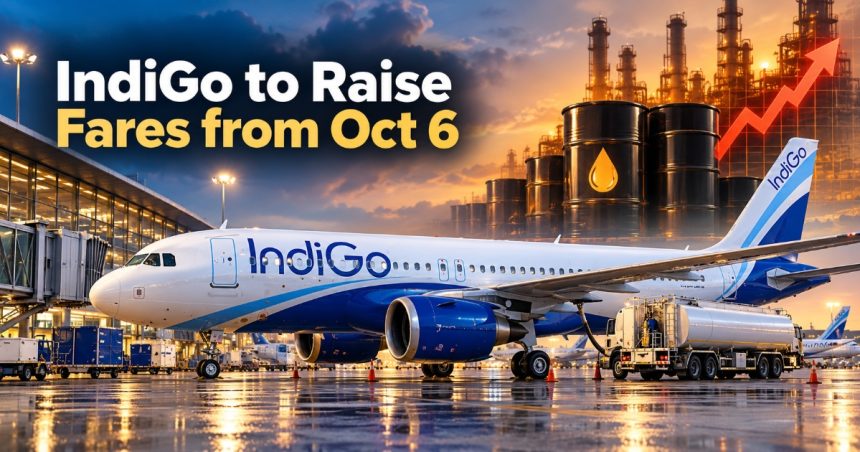
India’s largest airline IndiGo will increase fuel charges on domestic and international flights for all new bookings made from October 6, 2026, as aviation turbine fuel (ATF) prices continue to climb.
The move comes at a time when crude oil prices remain volatile and uncertainty surrounding the Iran war continues to keep energy markets under pressure.
Track Live : FII DII Data Today | NSE F&O Lot Size
Flying IndiGo Soon? Why IndiGo is increasing fuel charges now
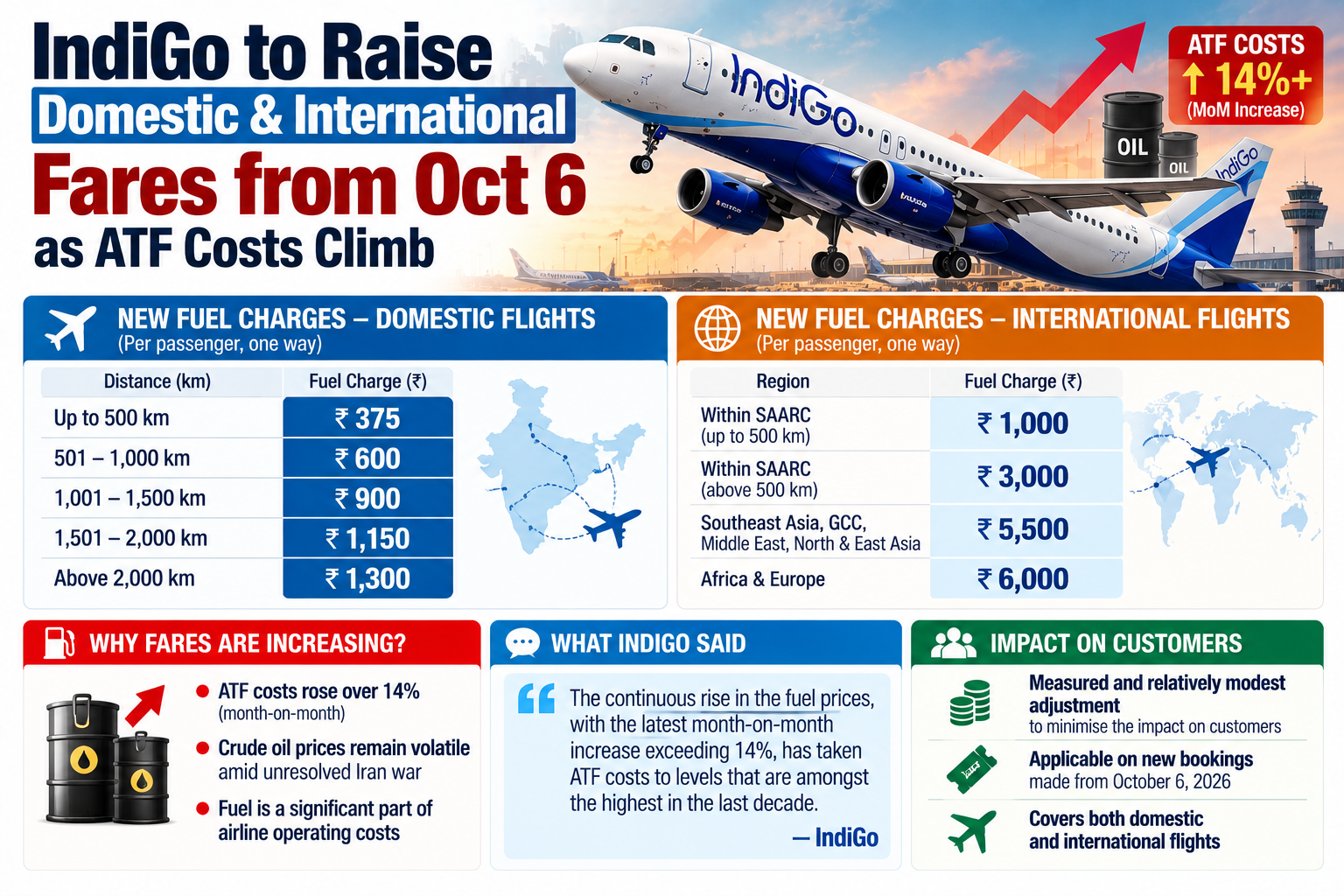
IndiGo said the latest month-on-month increase in fuel prices has exceeded 14%, pushing ATF costs to levels among the highest seen in the last decade.
The airline said, “Aviation Turbine Fuel makes up a significant share of airline’s operating costs,” meaning a sustained increase in fuel prices can directly affect the cost structure and economics of its network.
For investors tracking the IndiGo fare hike, this is an important development because fuel is one of the largest variable costs for airlines.
IndiGo Fare Hike: Key Details
- Airline: InterGlobe Aviation (IndiGo)
- Announcement date: October 5, 2026
- Effective from: October 6, 2026, for all new bookings
- Reason: Sharp rise in Aviation Turbine Fuel (ATF) prices
- Latest ATF increase: More than 14% month-on-month
- Impact: Higher fuel charges and therefore higher airfares for passengers
- Market: Domestic and international flights
- ATF cost: Has reached among the highest levels of the past decade, according to IndiGo.
Domestic passengers will face higher fuel charges
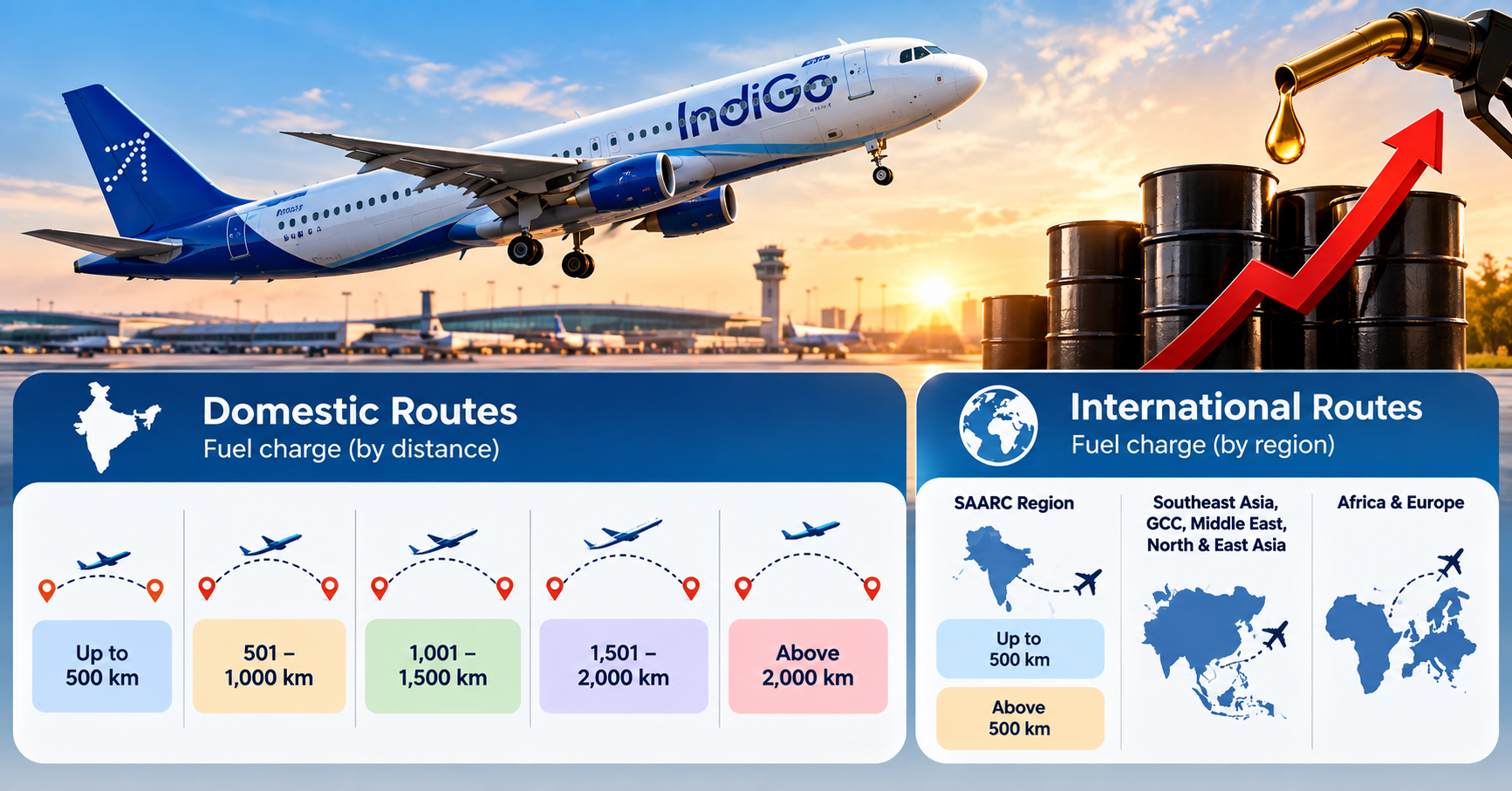
The revised IndiGo fuel charges will depend on the distance travelled on domestic routes.
Domestic Fuel Charges
| Flight distance | Revised fuel charge |
|---|---|
| Up to 500 km | ₹375 |
| 501–1,000 km | ₹600 |
| 1,001–1,500 km | ₹900 |
| 1,501–2,000 km | ₹1,150 |
| Above 2,000 km | ₹1,300 |
The revised domestic charges are designed to partly offset the increase in fuel costs without passing the entire burden on to passengers.
International Fuel Charges
| Region | Revised fuel charge |
|---|---|
| SAARC, up to 500 km | ₹1,000 |
| SAARC, above 500 km | ₹3,000 |
| Southeast Asia | ₹5,500 |
| GCC & Middle East | ₹5,500 |
| North & East Asia | ₹5,500 |
| Africa | ₹6,000 |
| Europe | ₹10,000 |
The Europe surcharge is the highest at ₹10,000 among the revised international charges.
International routes will also become more expensive
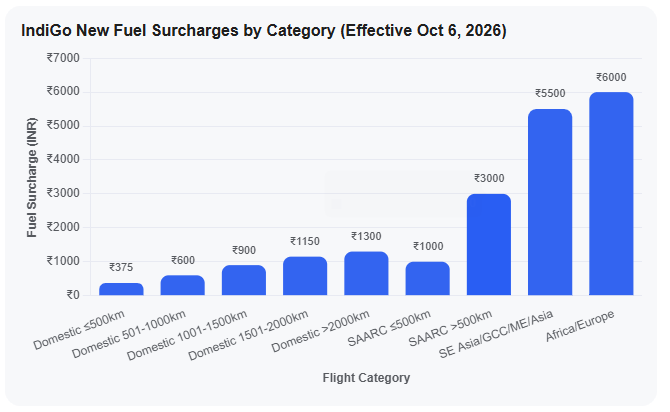
The IndiGo fare hike will also cover international flights, with charges varying by region.
Flights within the SAARC region will attract Rs 1,000 for distances up to 500 km and Rs 3,000 beyond 500 km.
Flights to Southeast Asia, the GCC, the Middle East, and North and East Asia will carry a Rs 5,500 fuel charge. Flights to Africa and Europe will attract Rs 6,000.
IndiGo said the adjustment was deliberately kept measured to limit the impact on customers.
Track Live : Opening Price Clues – What Pre-Market Data Says Today
What does this mean for passengers?
Passengers booking IndiGo flights from October 6 onward should expect higher ticket costs because the revised fuel charge will be added to the fare.
The impact will be particularly visible on:
- Long-distance domestic flights
- International flights to Europe
- International flights to Africa
- Middle East and GCC routes
- Southeast Asian routes
Existing bookings made before the effective date are not covered by the new charges.
Read More : RBI Governor Answers: India’s Payments Are Fast and Cheap, So What’s Left?
What does it mean for IndiGo investors?
For investors, the development is a mixed signal.
Positive: The higher fuel charge allows IndiGo to recover part of the increase in fuel expenses from passengers, potentially limiting pressure on operating margins.
Negative: If fuel prices remain elevated for an extended period, higher ticket prices could affect demand, passenger volumes and pricing competitiveness. Higher operating costs can also continue to pressure profitability.
Shares of IndiGo parent InterGlobe Aviation were largely flat around ₹4,924 on the NSE at 1:02 pm on October 5, according to the report provided. The stock was down about 0.12% at that time.
IndiGo has described the adjustment as “measured” and relatively modest, saying a larger increase would have been required to fully offset the rise in fuel costs.
What IndiGo investors should watch next
Shares of InterGlobe Aviation, IndiGo’s parent company, were largely flat after the announcement. The stock was trading at around Rs 4,924 on the NSE at 1:02 pm, down 0.12%.
For investors, the next major triggers will be crude oil prices, ATF costs, passenger traffic, yields and IndiGo’s ability to protect margins.
If fuel prices remain elevated, further fare adjustments across the aviation industry could become an important market theme in the coming weeks.