HDFC Bank Shares Slip Despite Meeting Q2 Earnings Estimates
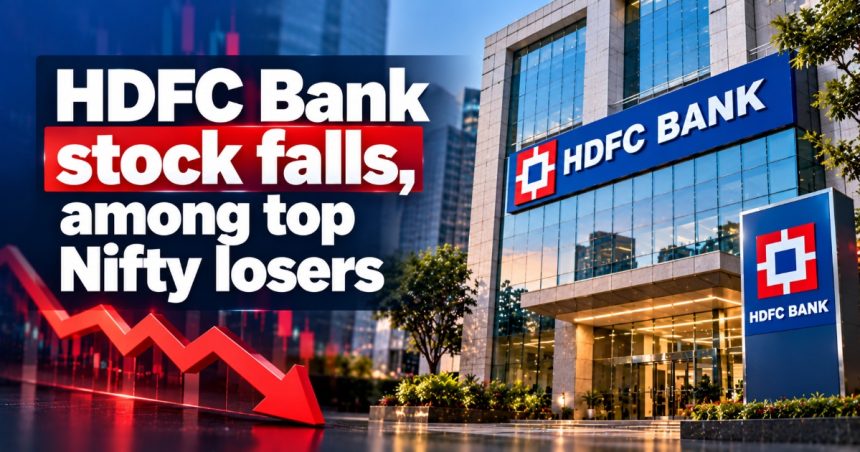
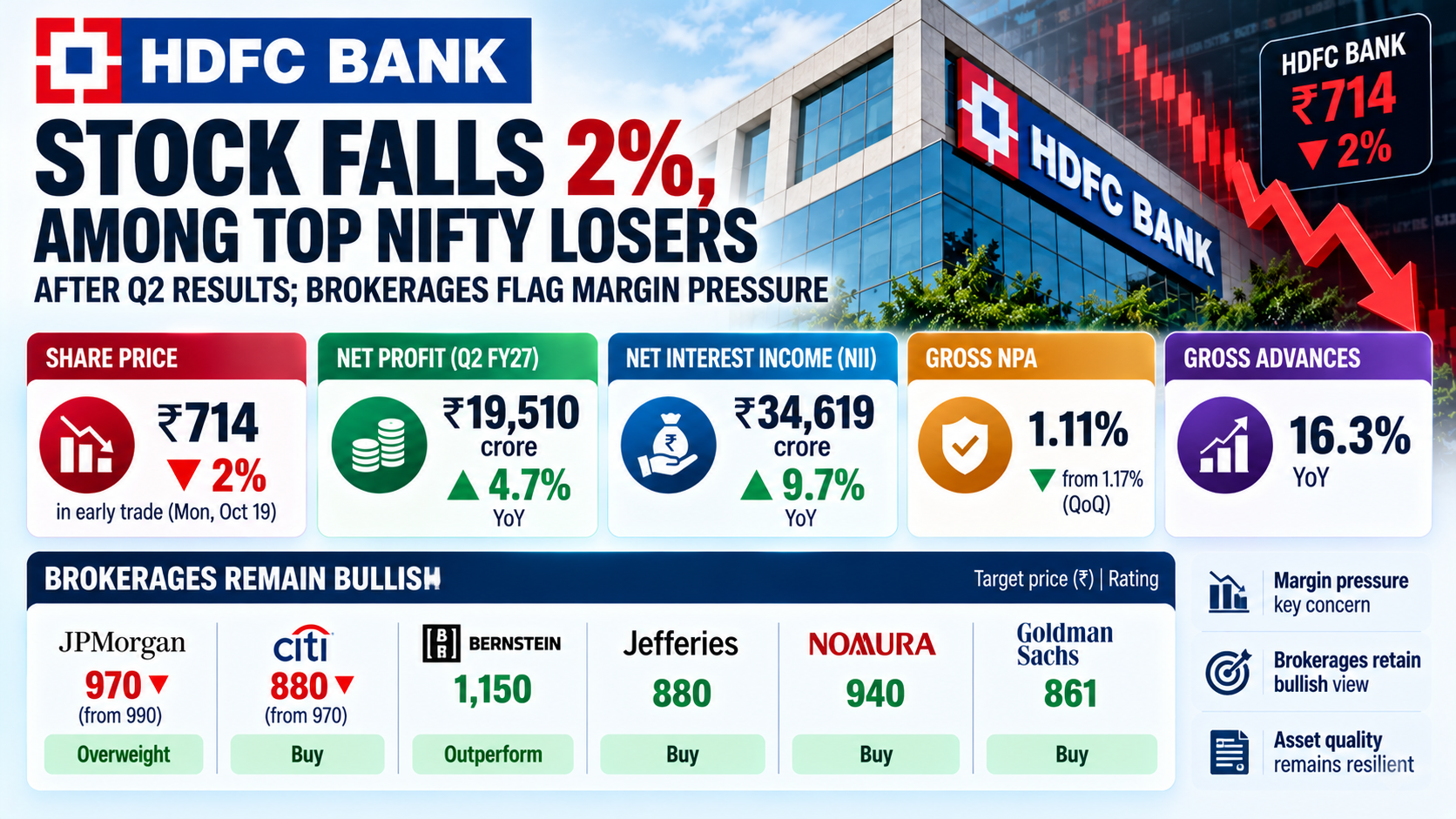
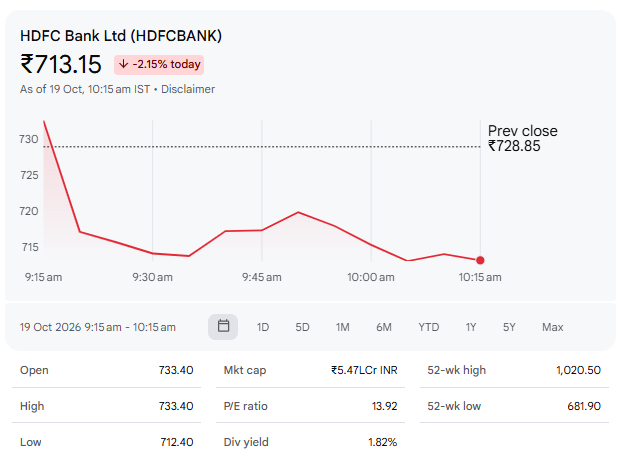
HDFC Bank shares came under pressure on Monday, October 19, after the private sector lender announced its second-quarter FY27 results over the weekend. The stock fell 2% to Rs 714 in morning trade, placing it among the top losers on the Nifty 50.
The market reaction highlights a key concern for investors: even when earnings broadly meet expectations, questions about future growth and profitability can weigh on a stock. For HDFC Bank, pressure on net interest margins and modest profit growth remained in focus, although major brokerages continued to recommend the stock.
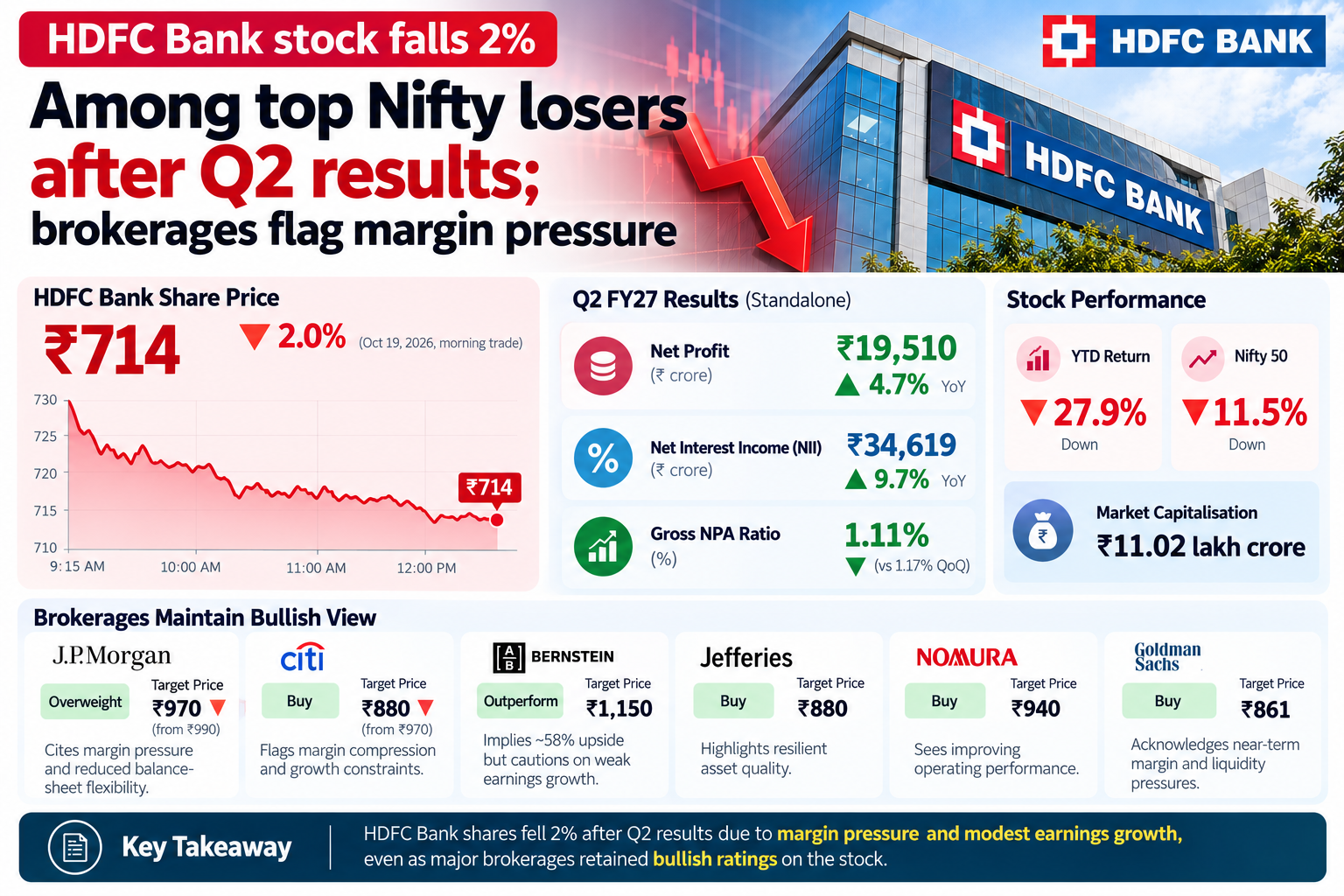
The bank’s share price has declined 27.9% so far this year, significantly underperforming the Nifty 50, which has fallen 11.5% over the same period. Its market capitalisation stood at approximately Rs 11.02 lakh crore.
Track Live : NSE Option Chain — Live | BSE Option Chain — Live Sensex & Bankex Options Data Today
HDFC Bank Shares Slip Q2 Results Show Profit Growth and Improving Asset Quality
HDFC Bank reported standalone net profit of Rs 19,510 crore for the September quarter, up 4.7% year-on-year. Net interest income (NII), which measures the difference between interest earned and interest paid, increased 9.7% to Rs 34,619 crore.
The bank also reported improvement in asset quality. Its gross non-performing asset (GNPA) ratio declined to 1.11% from 1.17% in the previous quarter, while gross advances grew 16.3% year-on-year.
However, provisions increased 18.7% sequentially to Rs 3,000 crore. Higher provisions and concerns about margins added to investor caution despite growth in net interest income and advances.
For investors, the results present a mixed picture: business growth and asset quality remain supportive, but profitability trends will be important in determining whether the HDFC Bank share price can recover.
HDFC Bank Q2 FY27 results at a glance
- Share price (morning trade) ₹714 Down around 2%
- Standalone net profit ₹19,510 cr +4.7% YoY
- Net interest income ₹34,619 cr +9.7% YoY
- Net interest margin 3.16% Down from 3.26% in Q1
Results for the quarter ended September 30, 2026. Share price and market data are from the October 19 morning-trade report.
Why did the stock fall despite profit growth?
Three major factors help explain the negative market reaction:
-
Margin pressure: Net interest margin (NIM) declined quarter-on-quarter, raising concerns about the bank’s ability to convert loan growth into stronger earnings.
-
Modest profit growth: Net profit increased 4.7% year-on-year, while weaker treasury gains weighed on reported earnings.
-
Liquidity and deposit concerns: Analysts flagged limited balance-sheet flexibility and the importance of mobilising deposits to sustain future lending growth.
The fall does not necessarily mean the results were poor across the board. HDFC Bank continued to report healthy loan growth and improving asset quality, but investors are looking for stronger profitability.
Important financial numbers investors should know
|
Financial metric |
Q2 FY27 performance |
|---|---|
| Net profit | ₹19,510 crore |
| Net interest income (NII) | ₹34,619 crore |
| Net interest margin (NIM) | 3.16% |
| Gross advances growth | 16.3% YoY |
| Deposit growth | 18.8% YoY |
| Gross NPA ratio | 1.11% |
| Net NPA ratio | 0.37% |
| Provisions | ₹3,574 crore |
Brokerages Retain Positive Ratings but Cut HDFC Bank Price Targets
Despite the share price decline, several brokerages maintained bullish ratings on HDFC Bank, although some lowered their target prices.
JPMorgan retained its ‘Overweight’ rating but reduced its target from Rs 990 to Rs 970, citing margin pressure and reduced balance-sheet flexibility. Citi maintained its ‘Buy’ recommendation while cutting its target from Rs 970 to Rs 880, pointing to margin compression and growth constraints.
Bernstein maintained its ‘Outperform’ rating with a target of Rs 1,150. Based on Friday’s closing price of Rs 728.85, that target implied approximately 58% upside. However, the brokerage flagged weak earnings growth and a moderation in return on assets to 1.8%.
Jefferies, Nomura and Goldman Sachs also retained their ‘Buy’ ratings, with respective targets of Rs 880, Rs 940 and Rs 861. Their views highlighted resilient asset quality and improving operating performance, alongside near-term margin and liquidity concerns.
These targets reflect brokerage estimates, not guaranteed future returns.
Track Live : Nifty Levels Today | Sensex Levels Today
|
Brokerage |
Rating |
Target price |
|---|---|---|
| Bernstein | Outperform | ₹1,150 |
| JPMorgan | Overweight | ₹970 |
| Nomura | Buy | ₹940 |
| Citi | Buy | ₹880 |
| Jefferies | Buy | ₹880 |
| Goldman Sachs | Buy | ₹861 |
Source: Moneycontrol’s October 19, 2026 brokerage roundup.
What are brokerages saying?
-
Bernstein: Its ₹1,150 target reflects a constructive long-term outlook, although it highlighted weak earnings growth and moderating return on assets.
-
JPMorgan: Retained Overweight but cut its target from ₹990 to ₹970, citing margin pressure and reduced balance-sheet flexibility.
-
Citi: Retained Buy but lowered its target from ₹970 to ₹880, pointing to margin compression and growth constraints.
-
Jefferies: Maintained Buy with a ₹880 target, highlighting the potential benefits of a better loan mix and improving margins.
-
Nomura: Maintained Buy with a ₹940 target, while flagging liquidity constraints and the need for stronger deposit mobilisation.
-
Goldman Sachs: Maintained Buy with an ₹861 target, noting that core revenue growth improved even as margins contracted.
Here’s What Happened Today and Why Traders Reacted
The weakness in HDFC Bank shares came alongside a broader decline in banking stocks. The Bank Nifty fell 0.5%, reflecting pressure across the sector.
At 9:25 am, the Sensex was down 100.65 points, or 0.13%, at 74,628.62. The Nifty 50 declined 26.70 points, or 0.12%, to 23,119.45.
Traders appeared concerned about margin compression and the bank’s modest earnings growth. When a stock has already underperformed the broader market, investors may also look for stronger signals of improving profitability before increasing their exposure.
The key question now is whether HDFC Bank can demonstrate better margin stability and sustained earnings growth in the coming quarters.
Read More : IDBI Bank Q2 FY27 Results: Operating Profit Up 59% Once Last Year’s NSDL Sale Is Removed
What HDFC Bank Investors Should Watch Next
The immediate outlook for HDFC Bank shares will depend on whether the bank can manage margin pressure while sustaining loan growth and controlling credit costs.
Investors should track net interest margins, deposit mobilisation, provisions, asset quality and future earnings growth. A sustained improvement in these indicators could support sentiment, while continued margin compression may limit the stock’s recovery.
For traders, the recent fall highlights the risk of reacting to headline profit growth alone. For long-term investors, the more important question is whether the bank can translate balance-sheet growth into stronger and more consistent profitability.